
The global glass processing industry is witnessing a significant transformation, driven by advancements in automation, precision engineering, and the ever-increasing demand for high-quality finished glass products. From architectural marvels to sleek automotive designs and custom furniture, the need for perfectly edged glass is paramount. This has led to the development of a diverse range of specialized machinery designed to meet every conceivable application. Today, we delve into the various types of glass edging machines that are setting new standards in the industry, from the foundational Glass Straight-line Edging Machine to the highly versatile CNC Glass Processing Center.
The Workhorse: The Glass Straight-line Edging Machine
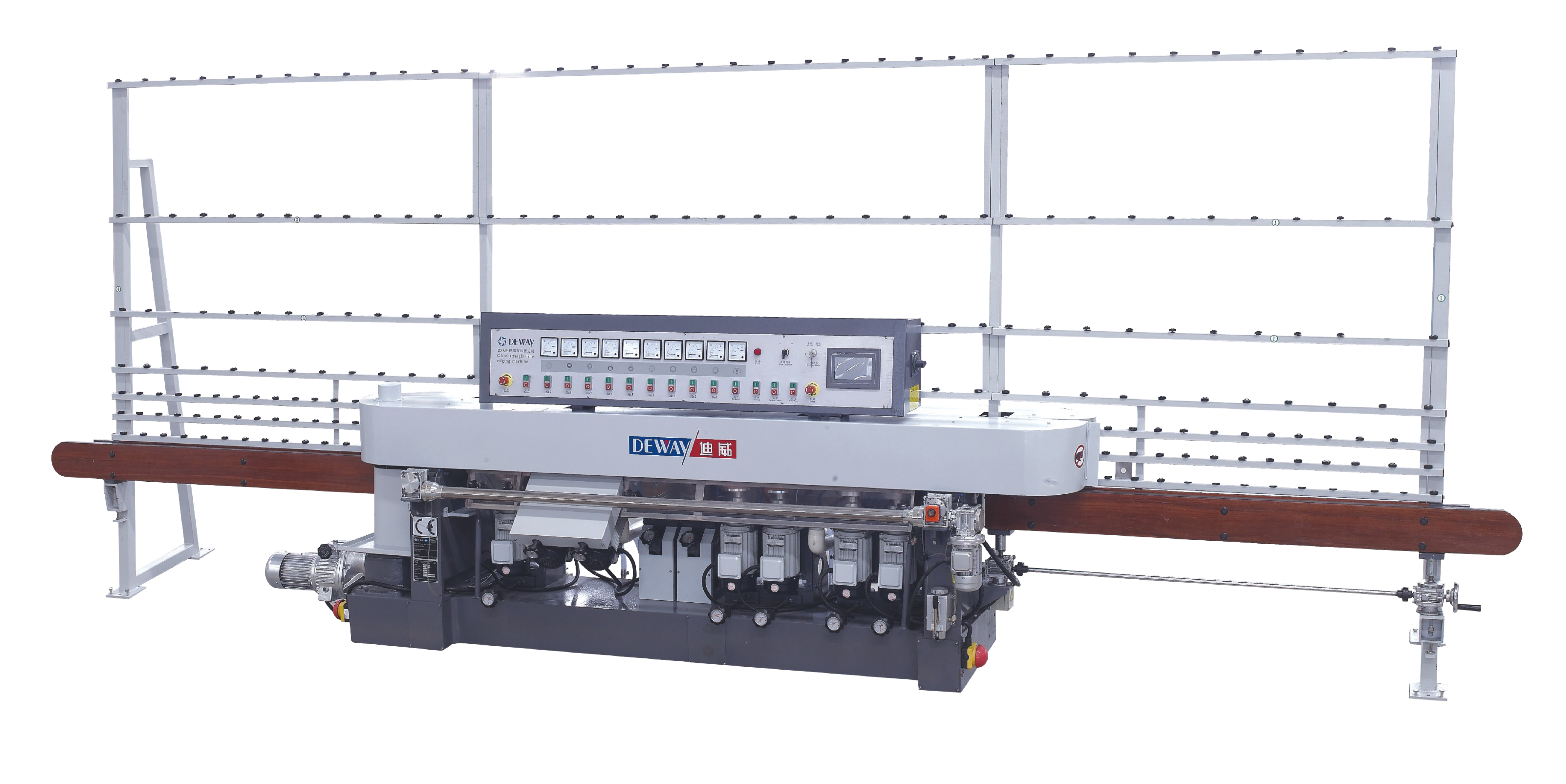
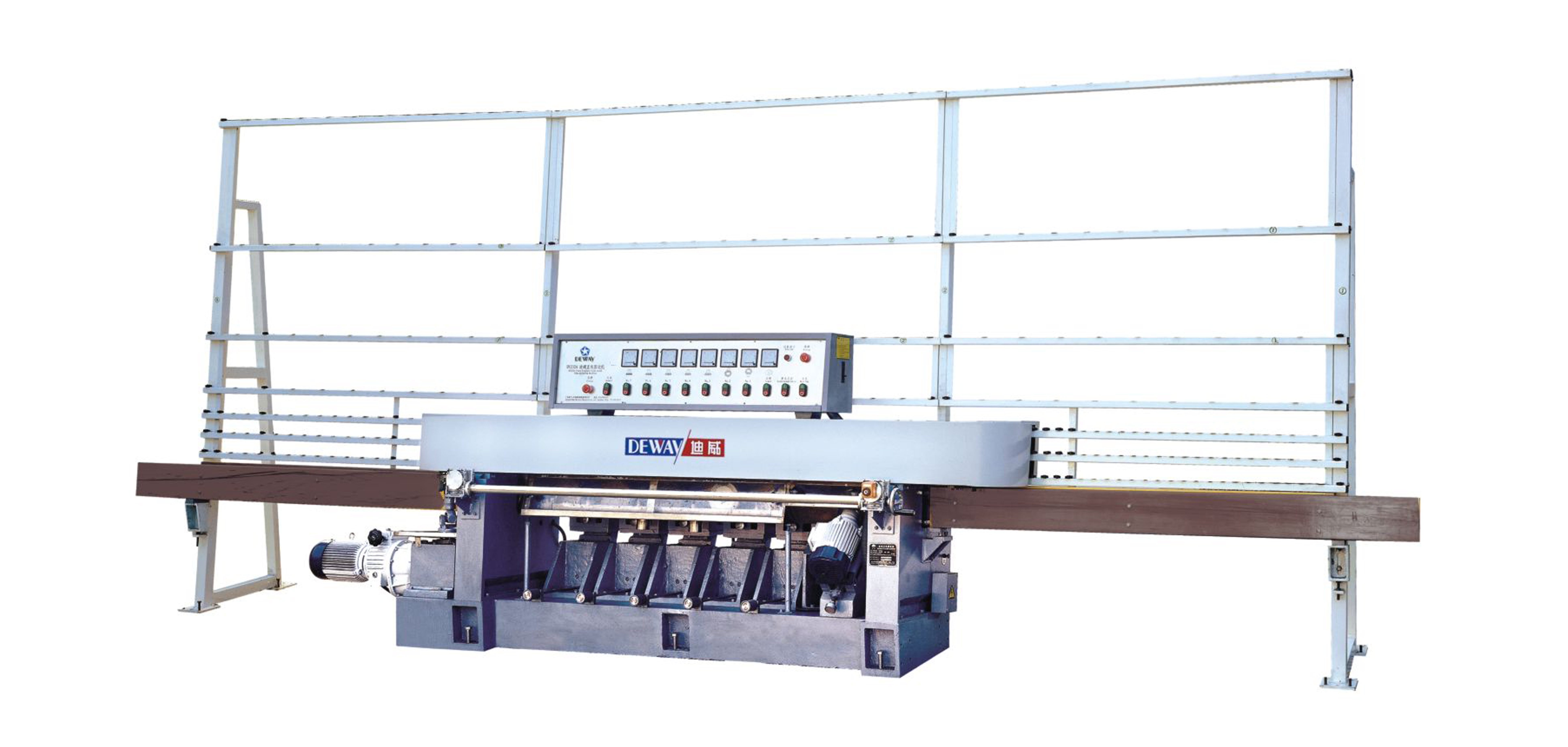
For decades, the cornerstone of any glass fabrication shop has been the Glass Straight-line Edging Machine. As the name implies, this machine is specifically engineered for processing the flat edges and arrises (corners) of plate glass. Modern iterations of this classic design have evolved significantly. They now feature advanced components such as special telescopic pressure plates for secure glass handling and integral dovetail sliding plates for the grinding head carriages. This construction ensures exceptional rigidity and minimal vibration, which are critical for achieving high-precision results. Operators appreciate the adjustable processing speeds, which allow for fine-tuning based on glass thickness and desired finish. Available in configurations ranging from 4 to 10 grinding heads, these machines efficiently combine rough grinding, fine grinding, and polishing in a single pass, making them an indispensable tool for standard flat-edge applications.
Achieving the Perfect Angle: The Glass Mitering Edging Machine
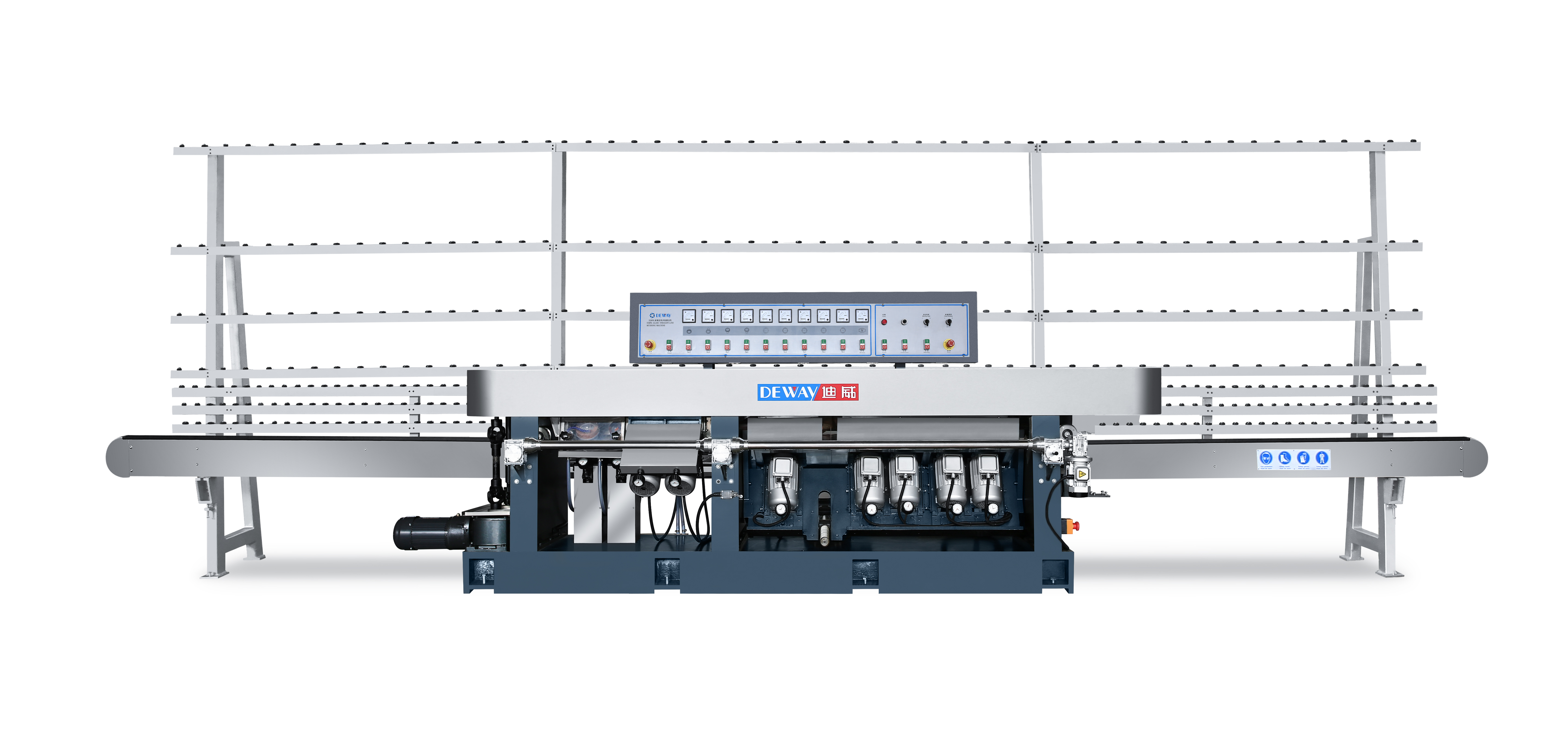
When projects demand beveled edges at precise angles, the Glass Mitering Edging Machine takes center stage. This specialized equipment is designed to process straight edges and 45° bevels on flat glass of various dimensions and thicknesses. Its key differentiator is the ability to adjust the grinding angle, typically anywhere from 0° to 45°. This flexibility allows fabricators to create everything from subtle decorative bevels to sharp miters required for glass assemblies and frames. The machine integrates multiple processes—rough grinding, fine grinding, polishing, and corner chamfering—into one continuous operation. With common models featuring 9 or 10 grinding heads, and the ability to adjust feed speed and feed rate during operation, the Glass Mitering Edging Machine offers unparalleled control and efficiency for producing angled edges.
Broadening Horizons: The Multi-Thickness Glass Beveling System
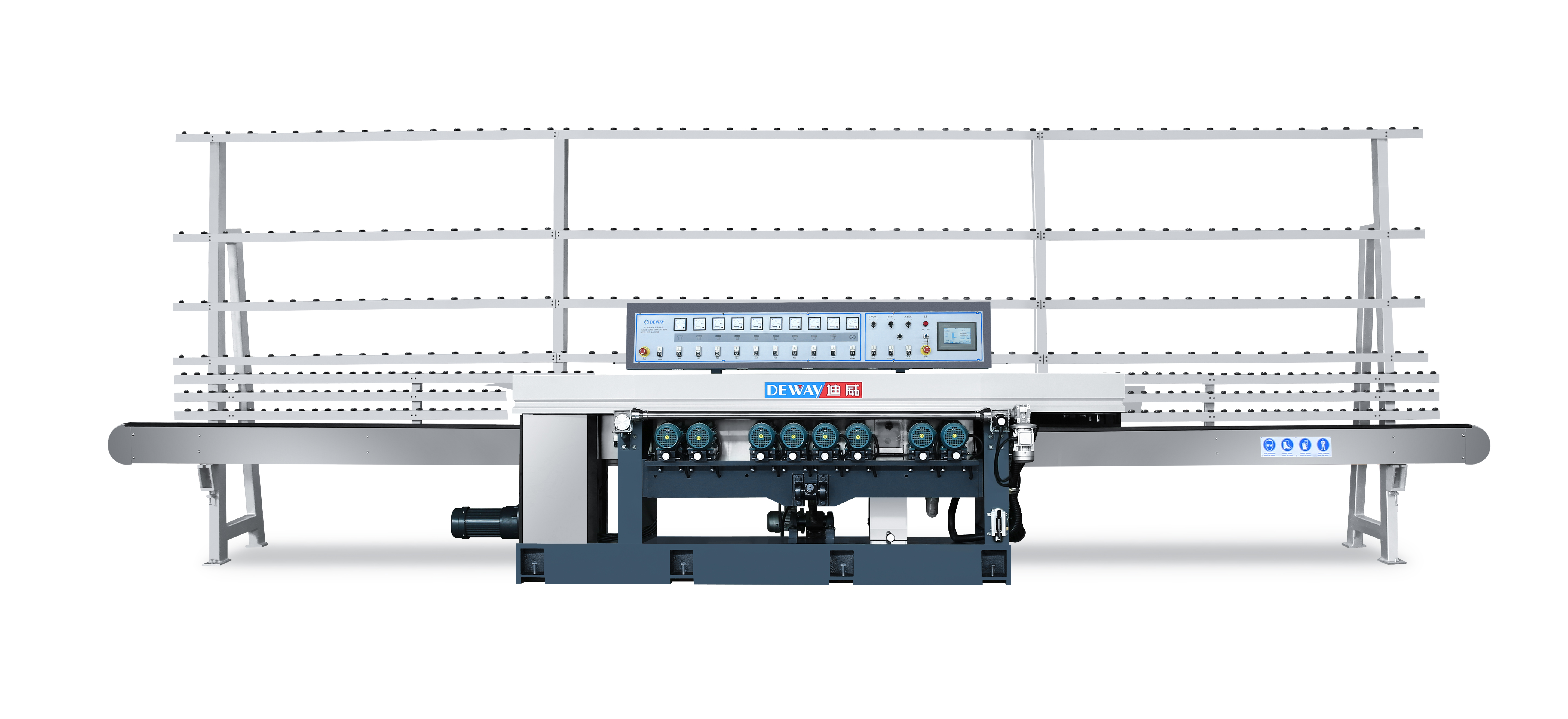
For creating wide, decorative bevels, the industry looks to the Multi-Thickness Glass Beveling System. These machines are specifically tailored for grinding long, sloping bevels on the edges of flat glass, a finish highly sought after in the mirror and decorative glass sectors. They are broadly categorized into two types: large-piece and small-piece bevelers. Large-piece systems can handle glass as small as 100x100mm, producing bevels up to 35mm wide at angles from 3° to 25°. Conversely, small-piece bevelers are designed for miniature works, starting from 30x30mm, and create bevels up to 15mm wide. Reflecting the market's evolving needs, manufacturers have recently introduced lifting-type beveling systems. These advanced Multi-Thickness Glass Beveling Systems can process glass as small as 30x30mm while offering an expanded angle range of 0° to 45° and a maximum bevel width of 35mm, merging the capabilities of both traditional categories into one highly adaptable unit.
Shaping the Edge: The Glass Straight-line Pencil Edging Machine
Round and decorative edges are the specialty of the Glass Straight-line Pencil Edging Machine. This versatile machine is used to grind pencil round edges, ogee edges, and other profiles on flat glass. It utilizes a sequence of shaped grinding wheels to perform rough grinding, fine grinding, and polishing in one seamless operation. Available in configurations like 6 or 8 grinding heads, this machine type is essential for producing the smooth, safe, and aesthetically pleasing edges required for table tops, shelves, and furniture glass. Its ability to create a consistent, high-gloss finish on curved profiles makes it a valuable asset for any business looking to offer a premium product.
Boosting Productivity: The Glass Double Edging Machine
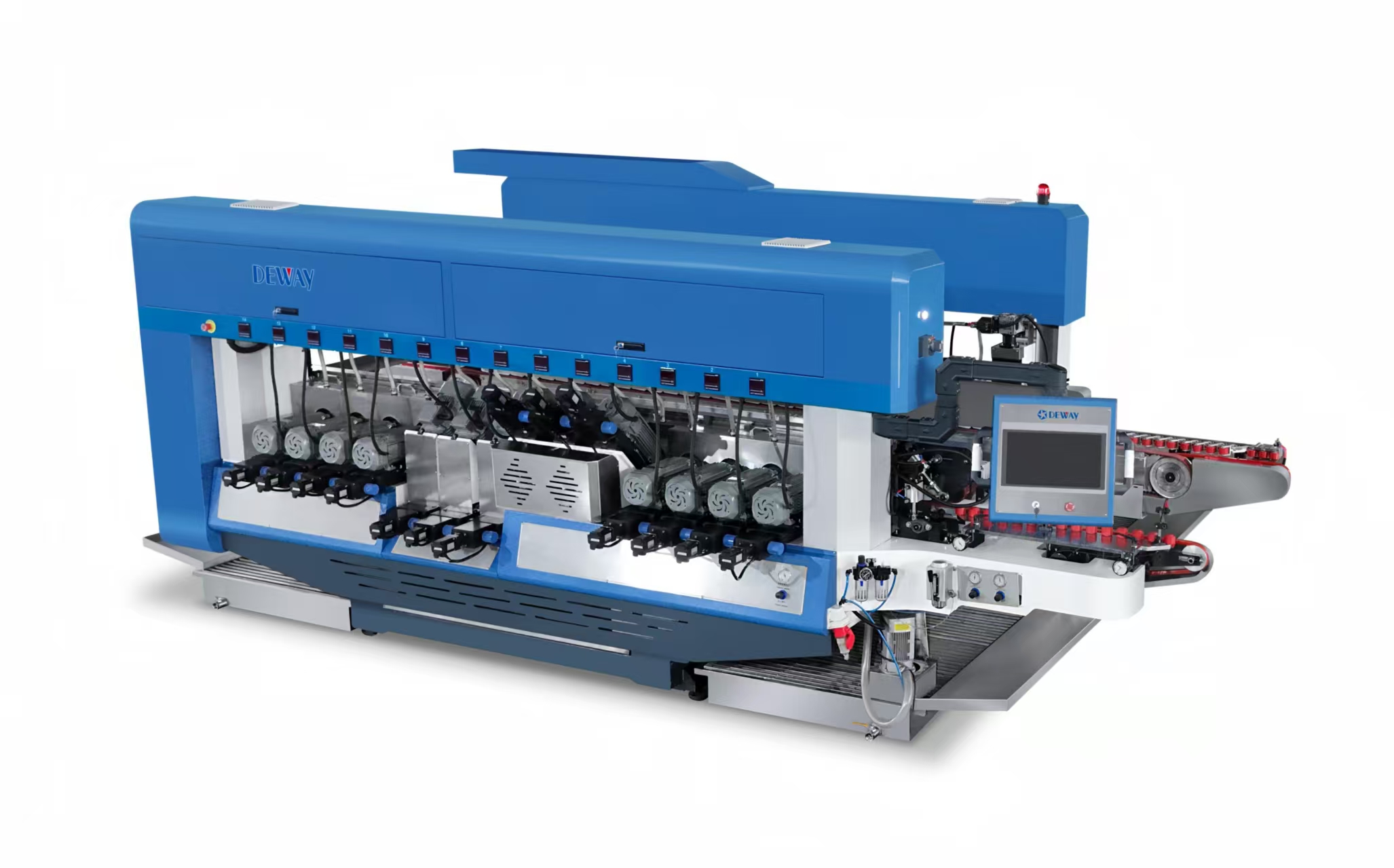
For high-volume production, especially in the architectural and automotive sectors, speed and parallelism are critical. This is where the Glass Double Edging Machine excels. Unlike single-side edgers that process one edge at a time, these powerful machines grind both parallel edges of a glass sheet simultaneously. This dramatically increases throughput and ensures perfect parallelism between the two finished edges. Configurations are extensive, ranging from 16 to 28 grinding heads, which work in tandem to grind and polish both sides at once. While they represent a higher initial investment compared to single-side units, their efficiency is unmatched, making them ideal for large-scale tempering or insulating glass production lines. Smaller, in-line versions are often integrated with glass transfer tables and washing machines to form complete, automated production systems.
The Symmetrical Solution: The Glass Double Round Edging Machine
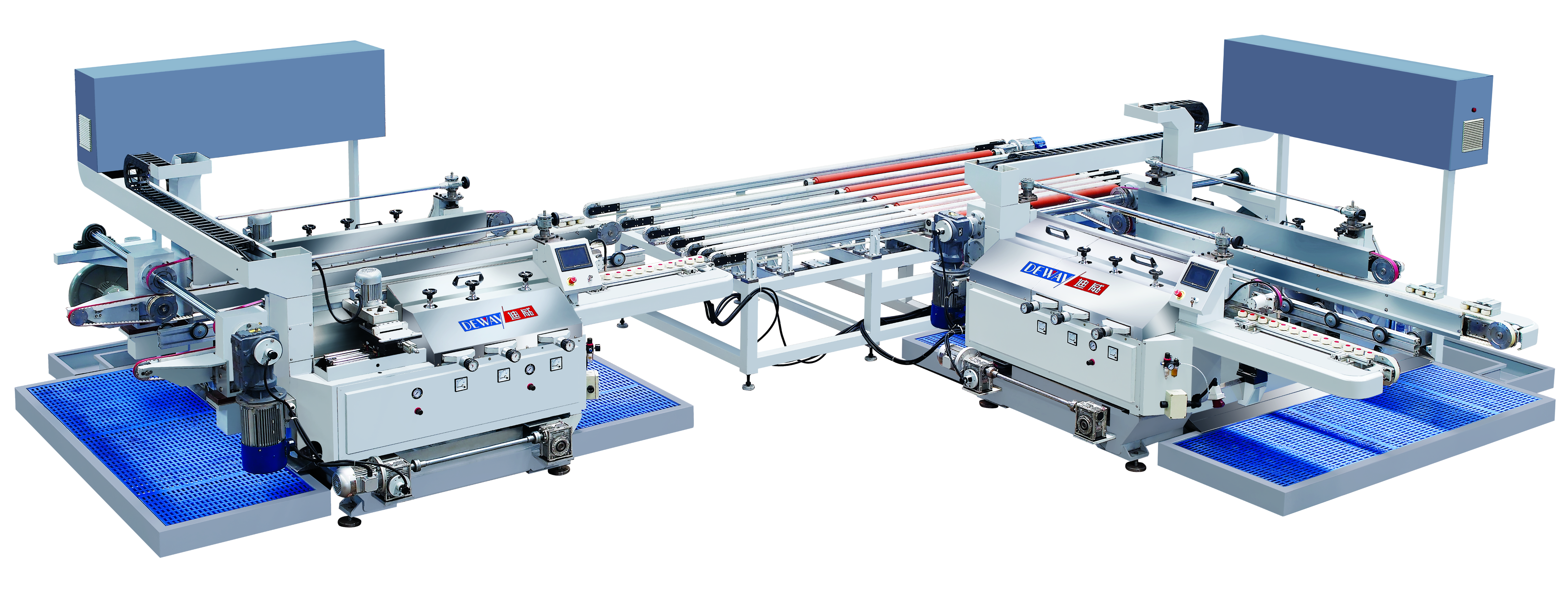
Building on the concept of simultaneous processing, the Glass Double Round Edging Machine is designed specifically for applying round or pencil edges to both sides of a glass strip concurrently. These machines are typically controlled by a PLC (Programmable Logic Controller) system, allowing operators to set processing parameters for rough grinding, fine grinding, and polishing through an intuitive interface. The use of variable frequency motors for speed adjustment, combined with robust dual linear guide rails and ball screw structures, ensures stable operation and precise dimensional control. With typical head counts of 16, 20, or 26, these machines are the go-to solution for efficiently producing symmetrically rounded edges on items like cabinet shelves, shower doors, and small tabletops.
The Pinnacle of Versatility: The CNC Glass Processing Center
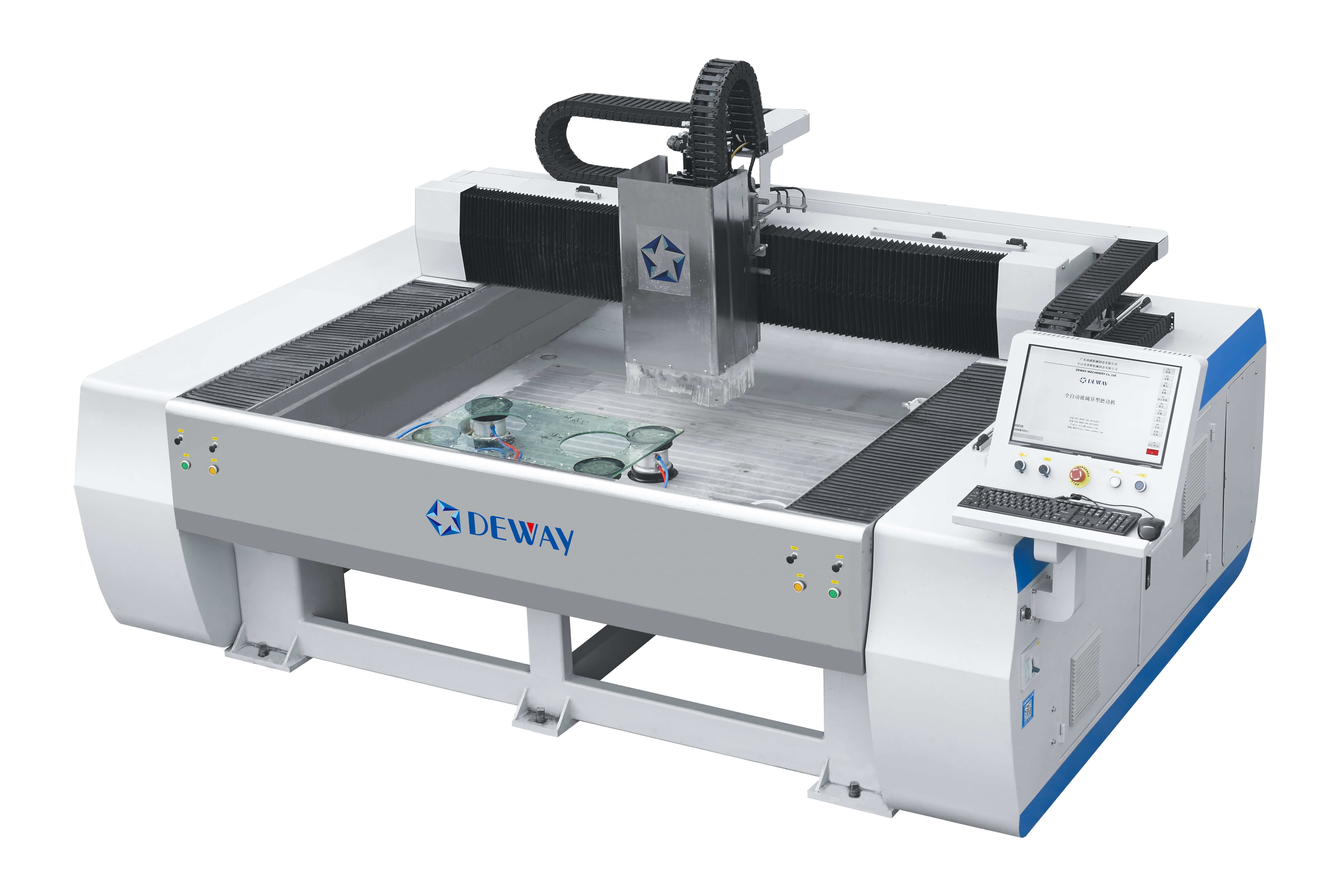
Finally, at the apex of glass processing technology lies the CNC Glass Processing Center. This is the ultimate solution for applications requiring complex shapes and multiple operations, such as edging, drilling, engraving, and polishing. A true game-changer, the CNC Glass Processing Center operates under sophisticated software control. It positions the glass using a vacuum table and then executes a sequence of operations automatically using an auto-tool changer. This magazine can hold various bits—drills, diamond wheels, and polishing wheels—allowing the machine to perform tasks like cutting a shape, drilling a hole, and polishing the edge without the glass ever being moved or repositioned. Equipped with a high-speed spindle that can reach up to 9,000 rpm, it delivers exceptional precision, speed, and a superior finish. While it simplifies complex tasks to the point of requiring only a single operator, its capability to mass-produce intricate, high-tolerance components for the shaped, furniture, and automotive glass industries is unparalleled.
In conclusion, the landscape of glass edging is rich with specialized technology. Whether the requirement is a simple straight edge, a wide decorative bevel, or a complex three-dimensional shape, there is a machine purpose-built for the task. As these technologies continue to evolve, integrating more automation and intelligence, the possibilities for glass as a material will only continue to expand.