
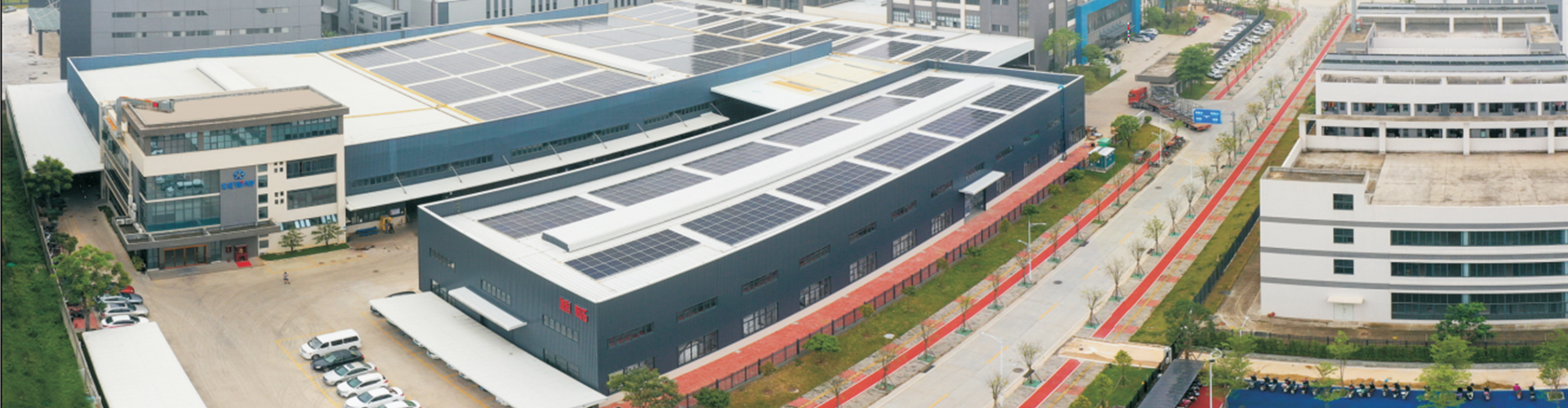
1. Market Growth and Industry Transformation
As the photovoltaic sector continues its rapid expansion and architectural glass demands become ever more stringent, glass deep-processing equipment is undergoing a fundamental shift from standalone machines to automated, intelligent production lines. Industry data indicate that the global market for glass double-edging machine lines reached USD 286 million in 2025 and is projected to grow to USD 447 million by 2032, representing a compound annual growth rate of 6.5%. Against this backdrop, the integrated system of Glass Double Edging Machine and Glass Double Round Edging Machine has emerged as the core solution for high-accuracy edge grinding, delivering both efficiency and quality breakthroughs in solar glass, ultra-thin electronic glass, and other advanced applications.
2. Innovative Combination Design—Flexible Adaptability for Diverse Needs
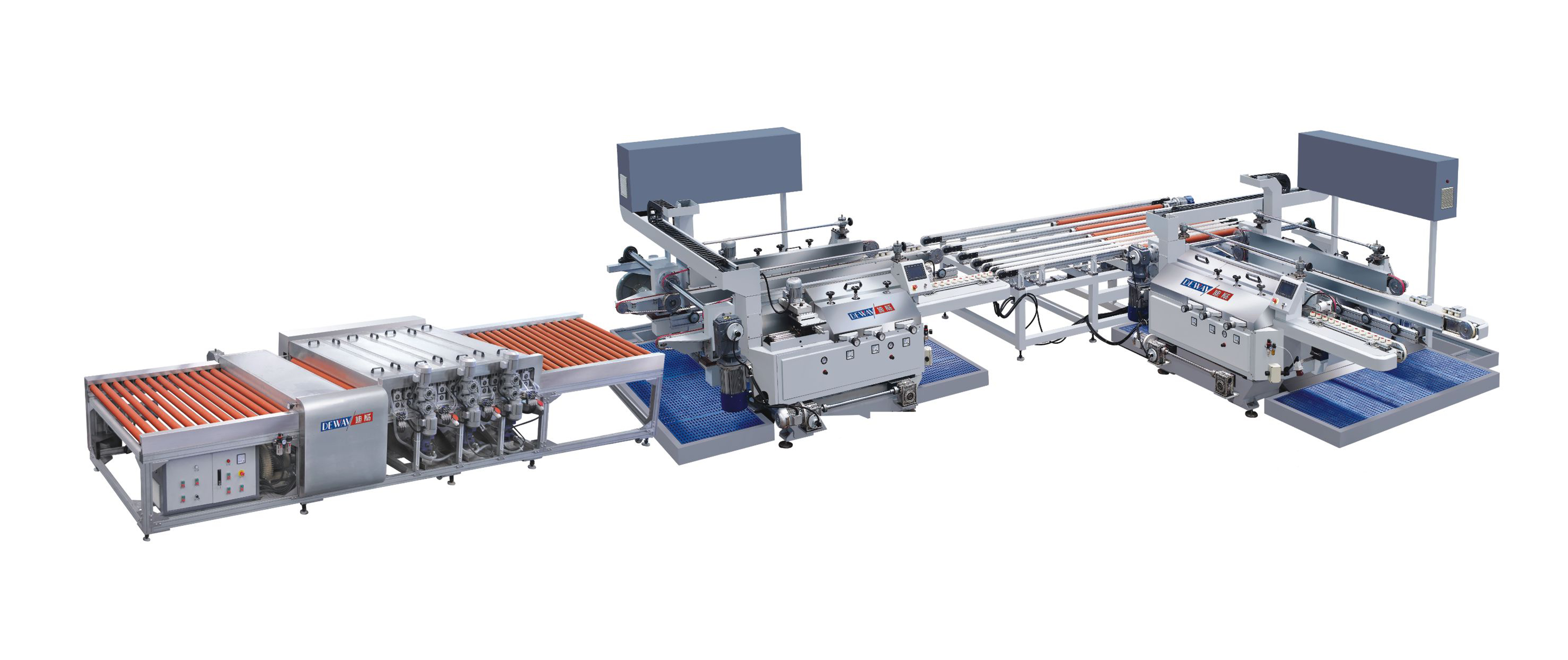
The system consists of two Glass Double Round Edging Machines and one Automatic Glass Transfer Table, arranged in an L-shaped layout. With the transfer table bridging the two edgers, the combination forms a four-side edging line that processes all four edges in a single pass. The overall working width can be customised to meet specific customer requirements—for example, DSYM0815 and DSYM0825 models—ensuring flexible adaptation to various glass sizes.
2.1 Versatility for Thin Glass and Multiple Edge Profiles
The equipment is designed for thin glass with thicknesses ranging from 2.8 mm to 8 mm, making it particularly suitable for solar photovoltaic glass, home appliance glass, and electronic display glass. Whether the required edge is a straight arc, a duck-bill shape, or a quarter-circle, all profiles can be ground and polished in one cycle, fully meeting the diverse process needs of modern glass manufacturers.
2.2 High-Efficiency Four-Side Processing
Thanks to the L-shaped placement and the transfer table, the two machines work in tandem to complete all four edges without manual turning. Once the processing dimensions and speed are set on the touchscreen, the entire operation runs automatically—significantly reducing human intervention and boosting throughput per unit of time.
3. Precision Drive System—Guaranteeing Dimensional Accuracy
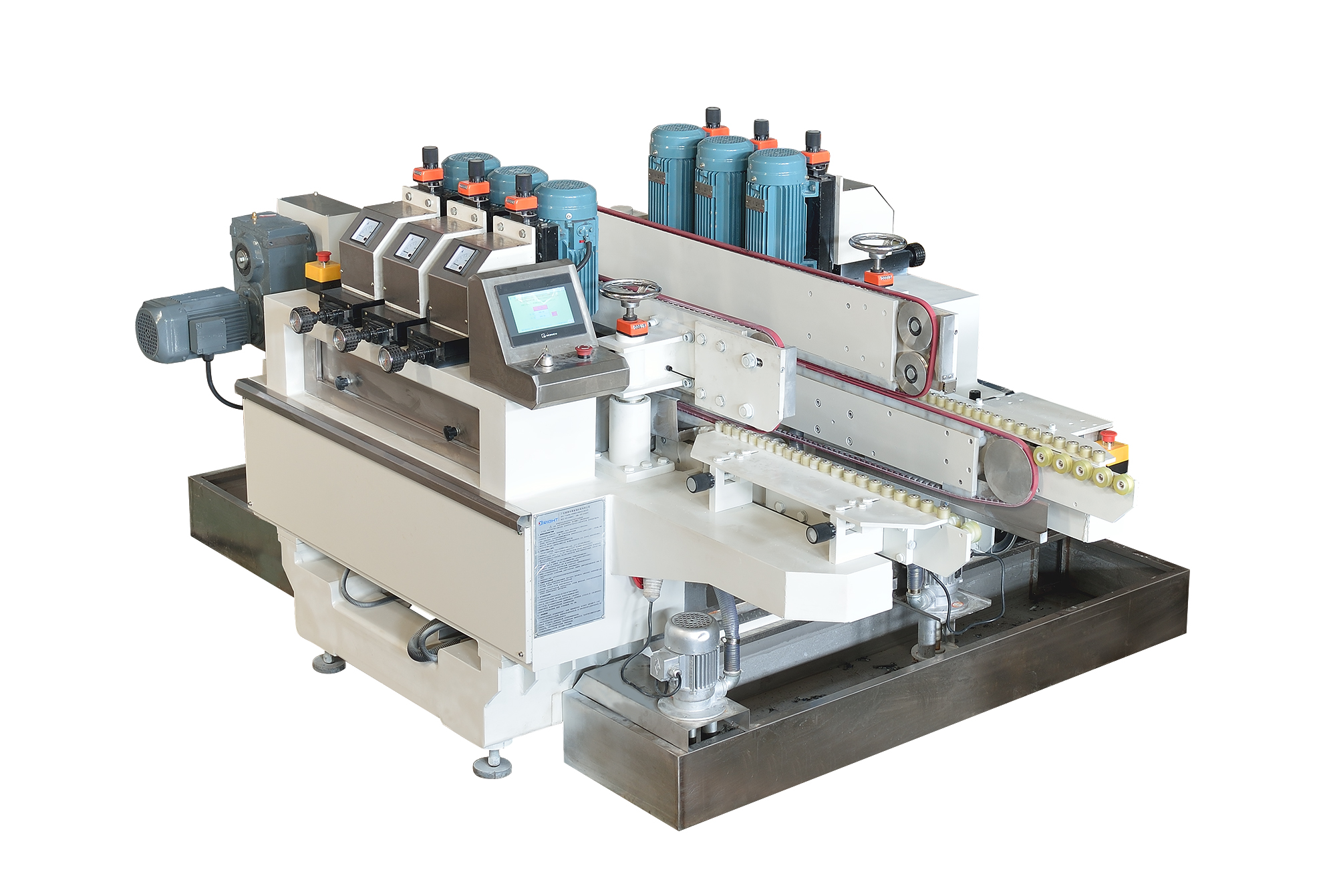
At the heart of the edging system lies a high-precision dual linear guide and twin ball-screw transmission mechanism. This design effectively eliminates clearance, minimises friction and mechanical wear, and ensures that the grinding heads open and close with exceptional repeatability and positioning accuracy.
3.1 PLC Control and Intuitive Operation
All parameters—including working width and feed speed—are governed by a PLC controller and entered via a user-friendly touchscreen interface. The entire sequence, from rough grinding and fine grinding to polishing, is orchestrated by the computer. The machine processes two opposite edges simultaneously, delivering precise dimensions and a mirror-like polished finish—even when handling high-volume, tight-tolerance production runs.
3.2 Reliable Transmission for Consistent Quality
The combined use of dual linear rails and ball screws not only enhances rigidity but also prolongs service life, reducing maintenance downtime. This robust construction is what sets a high-grade Glass Straight Line Edging Machine (or its round-edge counterpart) apart from inferior alternatives, ensuring stable output over years of continuous operation.
4. Efficiency and Quality—Powering Solar Glass Production
In terms of processing speed and transfer efficiency, this system ranks among the best in the industry. It seamlessly connects with Glass Washing Machine Horizontal units, tempering furnaces, and other downstream equipment, forming a complete deep-processing line for solar glass.
4.1 One-Stop Edging with Minimal Resource Consumption
The integrated process—rough grind, fine grind, polish, and chamfer—is completed in a single pass per side pair. This not only saves time and electricity but also reduces labour costs and floor space. The system is truly an “edge-grinding expert” for solar glass, delivering high output with low energy consumption and minimal waste.
4.2 Environmental and Operational Benefits
With sealed cooling and dust-collection features, the machine meets modern environmental standards. Its automated operation also lowers the risk of operator error, enhancing workplace safety. The combination of speed, precision, and eco-friendliness makes it an ideal choice for factories aiming to upgrade their production capabilities.
5. Smart Purchasing—Look Beyond Price and Appearance
The market for Glass Double Edging Machine and Glass Double Round Edging Machine systems is crowded with manufacturers of varying technical competence. Many buyers, however, make the mistake of focusing solely on price and exterior aesthetics, while neglecting critical internal components—leading to frequent breakdowns, inconsistent edge quality, and costly production interruptions.
5.1 Key Components to Evaluate
Industry experts advise that for applications demanding high precision and large batch sizes, investing in a technically mature and structurally robust edging system is the wisest decision. When sourcing, purchasers should carefully examine:
- The type and grade of linear guides and ball screws—these determine long-term accuracy.
- The stability and response time of the PLC control system.
- The precision class and durability of the grinding spindle and wheels.
- The manufacturer’s after-sales service, spare parts availability, and technical support.
5.2 System Coordination—Beyond the Edger Itself
Equally important is the compatibility of the Automatic Glass Transfer Table with the edgers, as well as the synchronisation with the Glass Washing Machine Horizontal and tempering line. A well-matched system ensures smooth material flow, minimises bottlenecks, and maximises overall line efficiency. Therefore, a holistic evaluation of the entire production chain is essential—not just the performance of a single machine.

6. Conclusion—A Long-Term Investment for Future-Ready Production
With photovoltaic installations continuing to surge and display panel technologies evolving rapidly, high-efficiency, high-precision edging equipment has become a critical enabler for glass processors to improve quality and reduce costs. Choosing a system that truly stands the test of time—such as the DSYM0815 or DSYM0825 customised configurations—offers far greater long-term value than opting for the cheapest upfront price. These integrated lines, built around the synergy of Glass Double Edging Machine, Glass Double Round Edging Machine, Automatic Glass Transfer Table, Glass Straight Line Edging Machine (as a reference for linear edging capability), and Glass Washing Machine Horizontal, represent a reliable, future-proof solution for the solar glass industry and beyond.
In a market where every second and every micron counts, investing in proven engineering and intelligent automation is not merely an expense—it is the foundation of sustained competitiveness. The question is no longer whether to upgrade, but how soon you can make the transition to a system that delivers precision, speed, and reliability, day after day, year after year.