
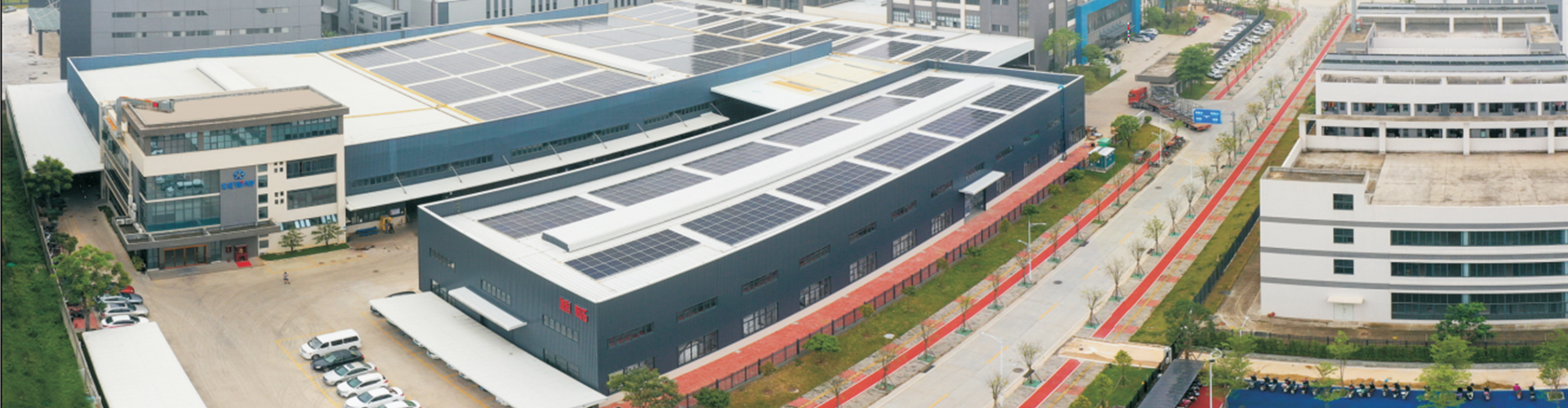
From cutting and edging to cleaning, drilling and tempering, modern glass fabrication relies on a wide spectrum of machinery. Common equipment includes various glass edging machines (straight line, bevel, pencil edge, double side, irregular shape, etc.), glass washing machines, glass drilling machines, CNC machining centers, glass tempering furnaces, and more. As technology advances and market demands rise, the performance and configurations of these machines are constantly being upgraded.
This news feature takes a detailed look at conventional edging systems and other key processing equipment, while highlighting several core innovations: the Glass Straight Line Edging Machine, Automated Glass Beveling Machine, Glass Straight-line Pencil Edging Machine, Double glass processing machine, and Automatic glass drilling machine. These technologies are reshaping glass workshops worldwide.
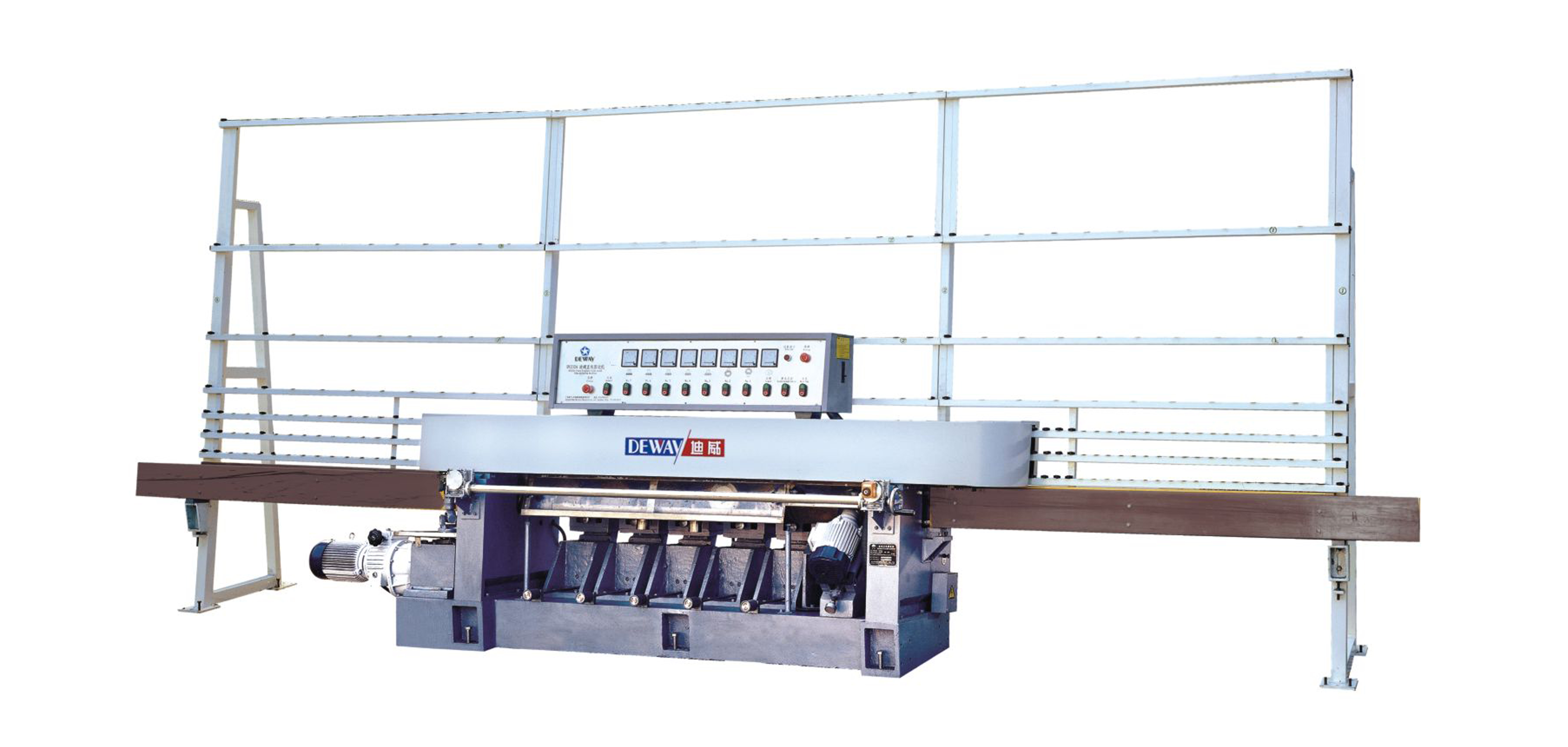
1. Glass Straight Line Edging Machine & Double Straight Line Edger
The Glass Straight Line Edging Machine (also called a straight-line edger) is primarily used for rough grinding, fine grinding, and polishing the bottom edge and both arrises of flat glass, producing a smooth, perfectly straight edge. It finds wide application in architectural windows, furniture glass, shower enclosures, display cabinets, and more.
Single-side edger features: It processes one edge at a time with a compact structure and flexible operation, typically at a feed speed of 3–6 m/min. This makes it ideal for small to medium batches or large-sized glass panels.
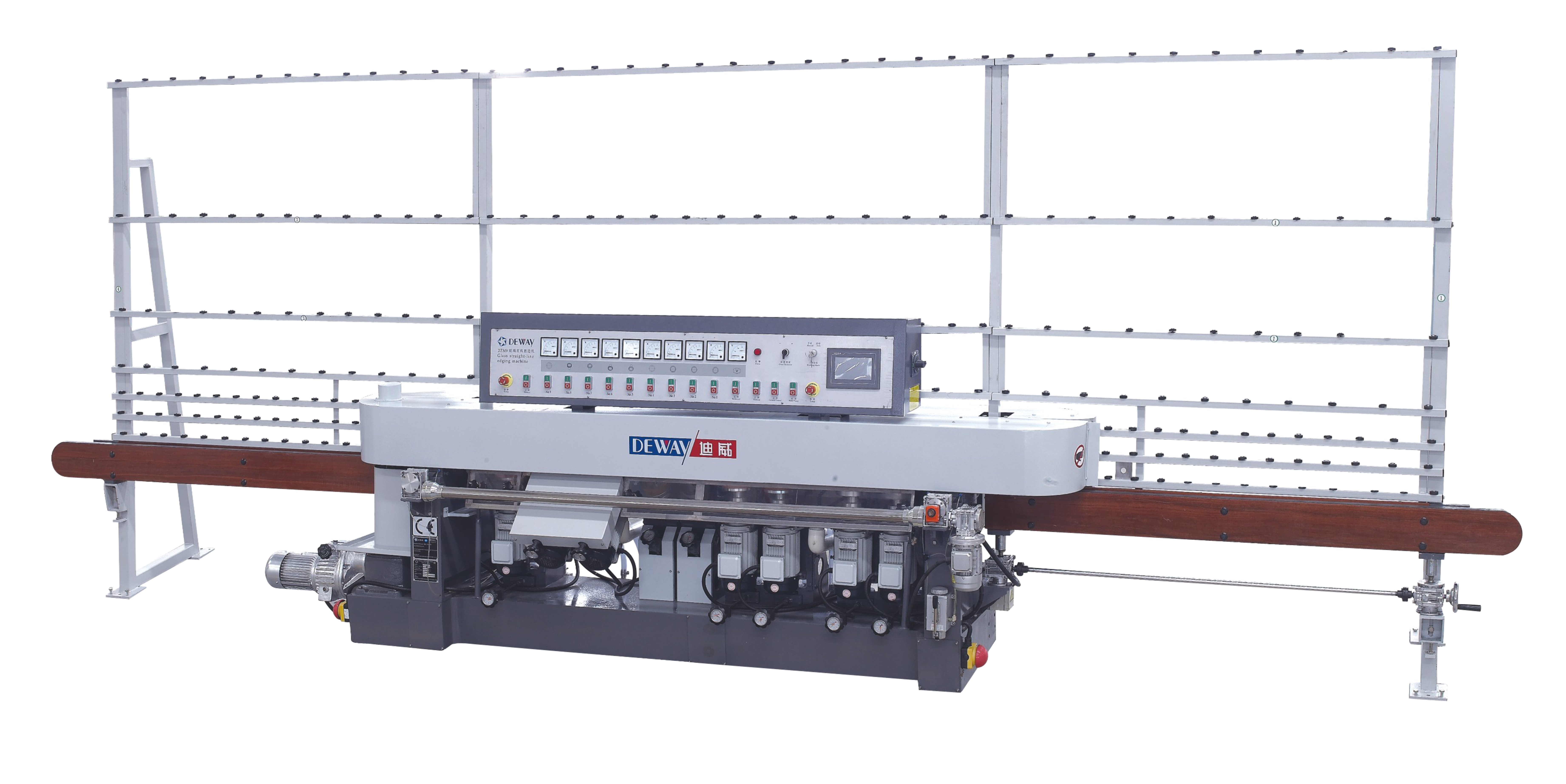
2. Automated Glass Beveling Machine
The Automated Glass Beveling Machine is designed to produce straight bevels (e.g., 45° or other angles) on flat glass. Bevel width and angle can be adjusted as required. Typical products include mirrors, coffee table tops, decorative background walls, art glass, and picture frames, where a beveled edge adds depth and aesthetic appeal. Thanks to modern automation, today’s beveling machines use multiple grinding wheels in sequence for roughing, finishing, and polishing, resulting in a mirror-bright bevel without edge chipping or scratching.
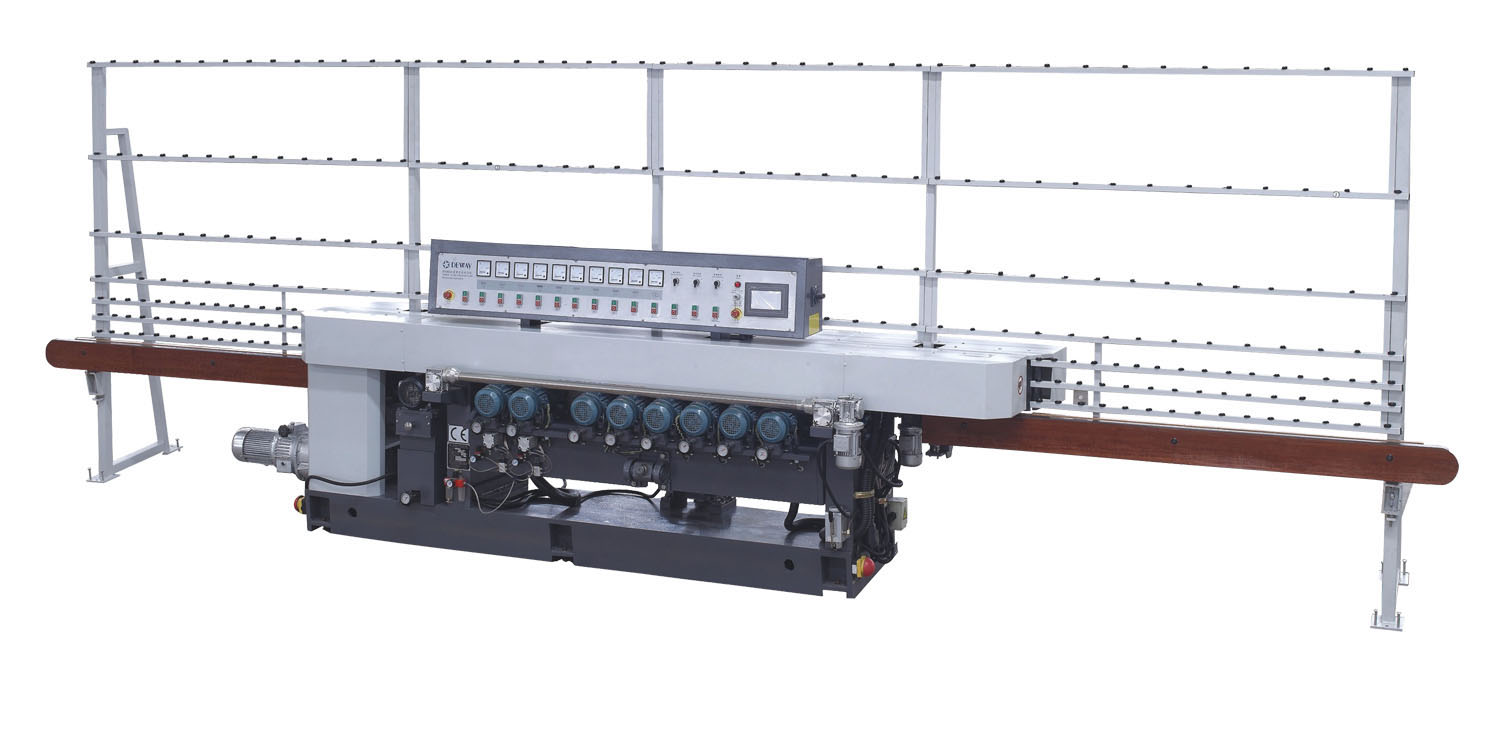
3. Glass Straight-line Pencil Edging Machine & Double Pencil Edger
The Glass Straight-line Pencil Edging Machine is dedicated to rounding glass edges into a smooth arc (pencil edge, also called bullnose), a duckbill shape (R-style edge), or other polished curved profiles. This edge style eliminates sharp corners, improves safety, and is easy to clean. Key applications: gas stove panels, range hood panels, induction cooker tops, dining table glass, and home appliance glass. The single-side pencil edger finishes one edge at a time, while the double version can process two parallel edges simultaneously, doubling throughput. Both employ specially shaped diamond grinding wheels to ensure consistent radius and high gloss.
4. Glass Irregular Shape Edging Machine
Used for grinding circular, elliptical, or any free-form curved edges on flat glass, these machines can also work on inner and outer arcs or imitation shapes. A vacuum suction table holds the glass securely while the grinding head follows a template or a numerical control program. Simpler models are manual or semi-automatic; they are suitable for small-batch, high-mix products such as crafts, optical lenses, and automotive rear-view mirrors.
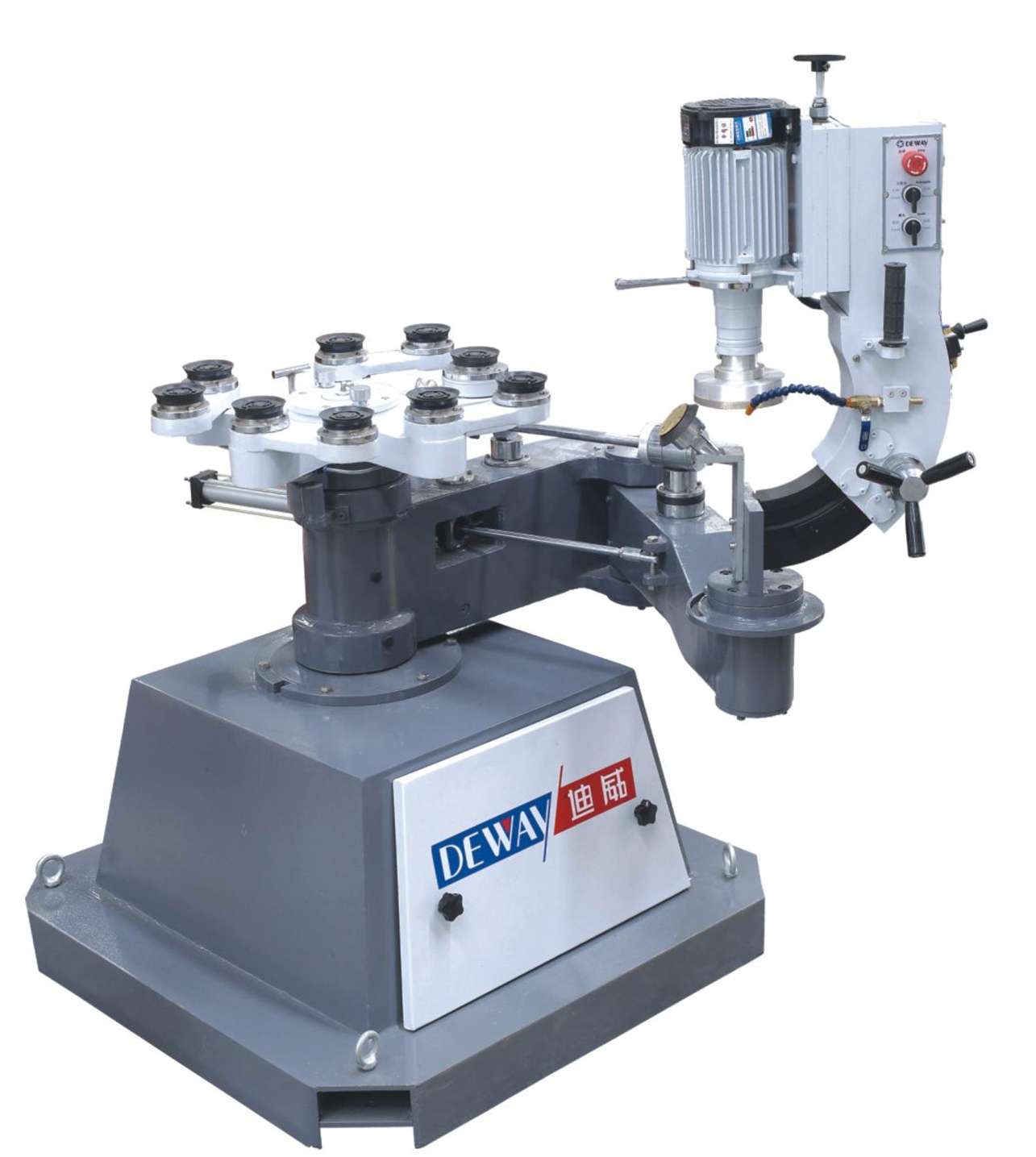
5. Double Glass Processing Machine (Double-side Straight Line Edger)
Here we highlight the Double glass processing machine – a logical upgrade from the single straight line edger. This machine grinds and polishes the bottom edges and arrises of two parallel sides at the same time. Its structure features two synchronized conveyor belts that grip the glass from both sides, with independent grinding heads on the left and right. Typically, the process includes roughing, finishing, and polishing in one pass.
Performance parameters: Feed speed generally ranges from 8 to 25 m/min, and high speed lines can reach 30 m/min or more. Working width is adjustable from a few tens of millimeters up to over three meters, handling glass thicknesses of 3–25 mm.
Key advantages: Excellent parallelism (error as low as ±0.1 mm/m) and diagonal accuracy make this machine a favorite for photovoltaic glass, automotive glazing, and architectural curtain wall glass in large volumes. Modern double glass processing machines also feature automatic width measurement, pressure adjustment, and intelligent alarm systems.
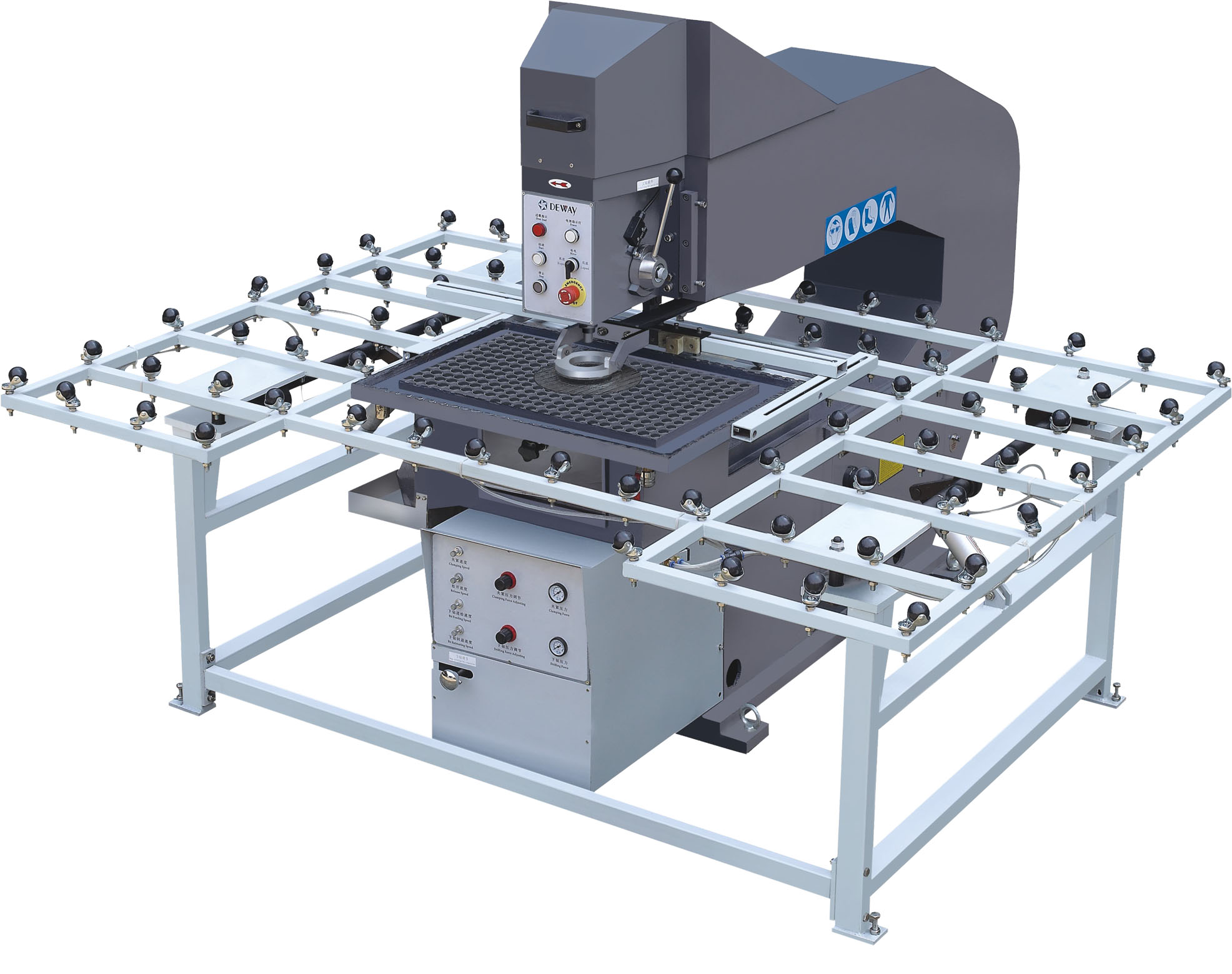
6. Automatic Glass Drilling Machine
The Automatic glass drilling machine is used to produce round holes, tapered holes, countersunk holes, or shaped openings in flat glass for handles, screws, hinges, or cable pass throughs. While traditional types include single head and multi head drills, the automatic version stands out for high efficiency and precision.
Single head drill: Suitable for small batches, large diameters, or oversized glass panels; often with manual or pneumatic positioning.
Multi head drill: Equipped with 2-6 spindles working simultaneously, completing multiple holes in one cycle – ideal for door/window hinge holes and air conditioner panels.
Automatic drilling machine features: Advanced automatic drilling machines incorporate CNC control, automatic tool positioning, and programmable hole patterns. They achieve accuracy down to ±0.1 mm and are ideal for complex hole arrays on shaped glass. Technical essentials include nickel-plated or diamond core drills, water cooling to prevent edge chipping, and intelligent control of feed rate and pressure. High-end models also offer auto loading/unloading and rotary worktables.
7. CNC Glass Machining Center
This is a multi-function system integrating edging, drilling, chamfering, slotting, milling, and even water jet cutting in one setup. It suits complex parts such as shaped glass, bathroom glass, home appliance glass, and optical components.
High precision: Equipped with high speed electric spindles, servo drives, and precision ball screws, positioning accuracy reaches ±0.05 mm.
High flexibility: CAD/CAM software allows quick switching between different shapes without changing mechanical tools or molds.
Multi functionality: Can be fitted with diamond profile wheels, drills, polishing pads, and milling cutters to produce pencil edges, bevels, stepped edges, and more.
Most models use a vacuum platen to secure the glass, with travel sizes ranging from 1.5 m × 2 m up to 2.5 m × 4 m, accommodating large sheets. The latest trend integrates in line inspection, automatic tool changers, recirculating coolant systems, and even 5 axis linkage for 3D curved glass surfaces – used in smart automotive displays and mobile phone cover glass.
8. Glass Washing Machine
Finally, no modern glass line is complete without a washing machine. Using brush rollers, high pressure air knives, or ultrasonic technology, it removes dust and oil residues, then dries the glass before subsequent processes. It is an essential companion for tempering, coating, and insulating glass production lines.
Outlook: Moving Toward High Speed, Intelligent Lines
As Industry 4.0 concepts and automation spread, glass processing equipment is moving toward higher speed, greater precision, and intelligent line integration. The Glass Straight Line Edging Machine remains the workhorse for straight edge jobs, while the Automated Glass Beveling Machine has become indispensable for decorative panels. The Glass Straight-line Pencil Edging Machine ensures smooth, safe edges for household appliances, and the Double glass processing machine delivers unrivalled productivity for two side parallel finishing. Meanwhile, the Automatic glass drilling machine brings precision and efficiency to hole making operations. Together with advanced CNC machining and washing systems, these technologies enable glass fabricators to meet ever rising quality and efficiency demands.
The question is no longer whether these machines can keep up – but how fast the next generation of fully connected, smart glass processing lines will arrive.