
Introduction
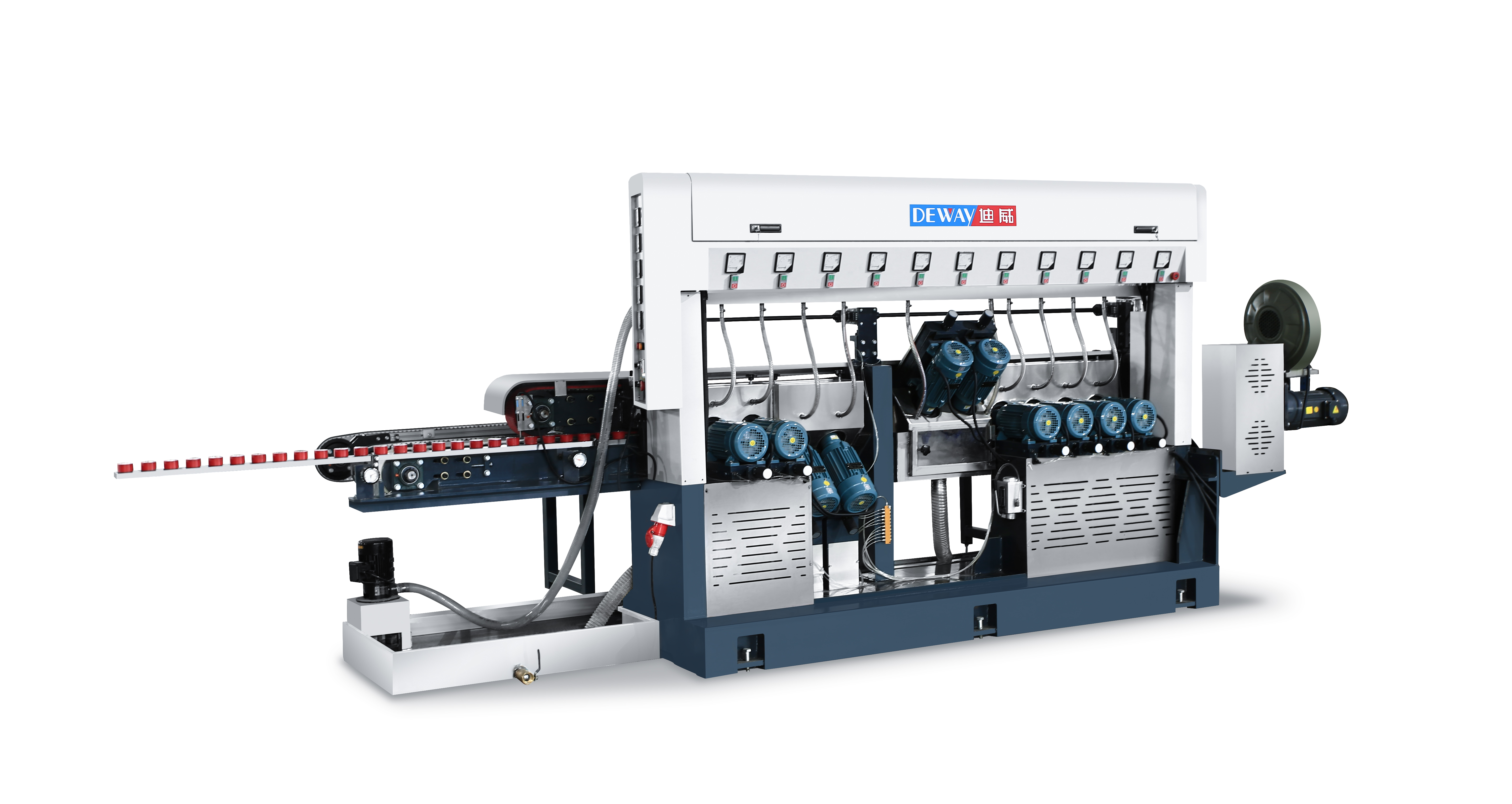
A modern glass fabrication plant relies on a suite of equipment: Horizontal glass double edging machines for parallel edges, horizontal straight line edging machines for chamfers, Glass Variable Miter Machines for complex angles, CNC Glass Polishing Machines for high-gloss finishes, and Automatic horizontal glass washers for final cleaning. Among these, the glass beveling machine—which produces sloped, polished edges—often determines the aesthetic and structural quality of the final product. But with many brands offering different configurations, how do you select a beveler that delivers consistent precision over years of heavy use? Industry experts agree that six core mechanical subsystems hold the key. This article breaks down each one, providing a practical checklist for buyers.
1. Diagonal Positioning Device—The Anchor of Accuracy
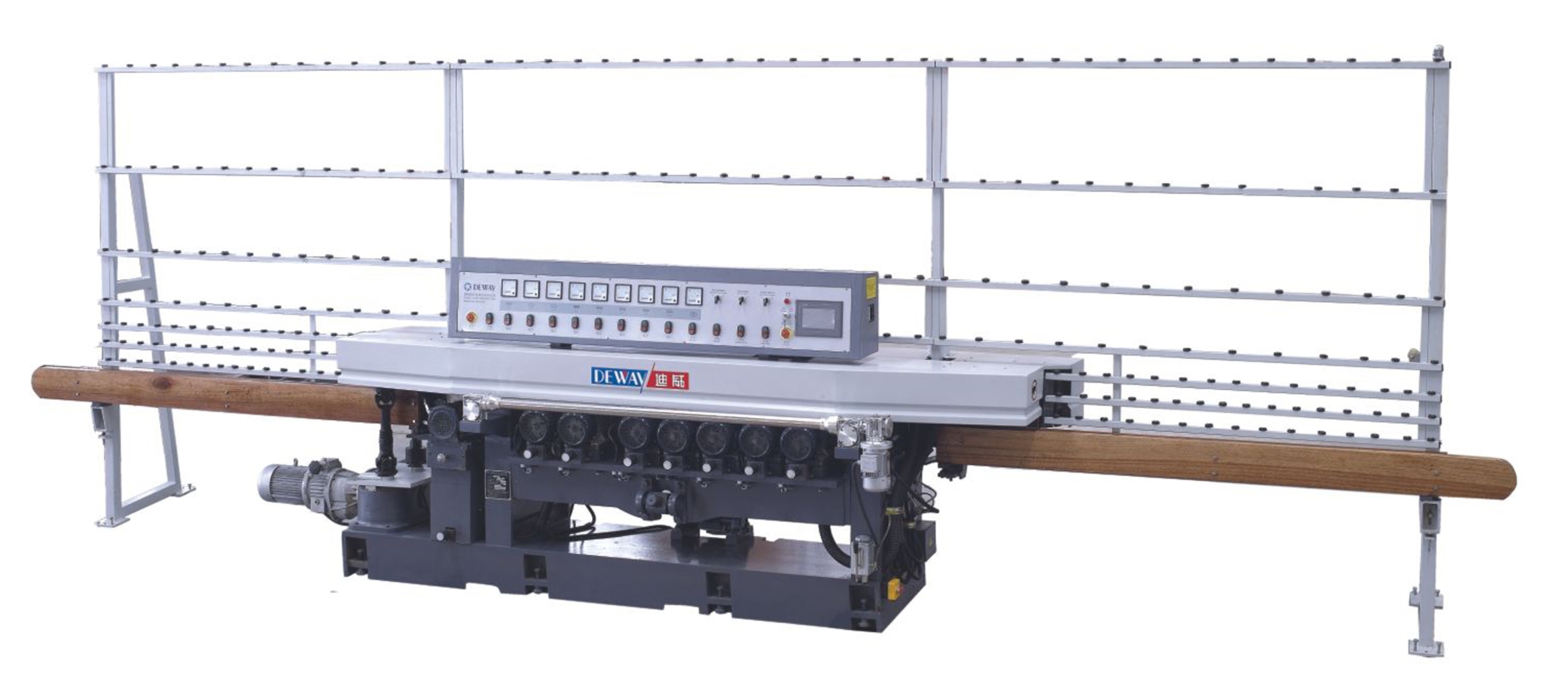
This device clamps the glass and sets its orientation before grinding. Examine three factors: cylinder force, brand reputation, and adjustability. Weak cylinders cause shifting and inconsistent bevel widths. Poor adjustment mechanisms waste setup time. Choose a unit with ample clamping power, reliable components, and easy fine-tuning. A well-designed positioning device ensures repeatable accuracy and reduces reject rates.
2. Gearbox—Thickness and Bearings Matter
Housing Thickness
The synchronous belt pulley mounts on the gearbox casing. If the casing is too thin, belt tension will distort it over time, misaligning bevel gears and causing uneven wear, noise, and eventual failure. Ask for the casing thickness—a heavier casting indicates robustness.
Bearing Type—Tapered Roller Bearings Required
Bevel gears experience axial, radial, and tangential forces. Some manufacturers use single deep-groove ball bearings—a serious mistake because they cannot handle axial loads. This leads to rapid wear, increased backlash, and chatter. The correct design uses paired tapered roller bearings, which support combined loads with high rigidity, ensuring stable gear meshing and long service life.
3. Support Frame—Single vs. Double Sided
The moving carriages ride on linear guides via a support frame. Single-sided frames create an overturning moment, tilting the guide blocks and causing uneven track wear, loss of precision, and even block cracking. Double-sided frames balance the load symmetrically, eliminating tilt and distributing wear evenly. This results in smoother opening/closing, better parallelism, and two to three times longer guide life. Always check the frame design before purchasing.
4. Conveying Guide Rails and Rail Beam—The Rigidity Backbone
Material Quality
Ask about the rail steel grade and supplier. Low-quality steel wears quickly, producing dips that ruin edge flatness. Precision-ground, hardened rails (HRC 50+) are essential. Inspect new rails for straightness and surface defects.
Beam Support Arrangement
The rail beam supports the grinding heads. If its support points are poorly spaced, the beam will sag, bending both beam and rails. Repeated opening/closing on a bowed beam can bend the drive shaft or pull it out of alignment. Look for a beam with multiple brackets or a heavy box-section design to maintain straightness under load.
5. Grinding Wheels—Don't Mask Flaws with Imports
Wheels directly affect finish and chipping. Some vendors tout expensive imported wheels to divert attention from poor spindle rigidity or vibration. A truly good machine should perform well even with reasonably priced domestic wheels. Insist on knowing the wheel brand, grit, and bond. Test the machine with your own glass and typical wheels—if it only works with ultra-premium wheels, that is a red flag.
6. Motor Slide Plate—Rigidity Prevents Wobble
The slide plate carries the spindle motor and allows compensation adjustments. It must move smoothly for tuning but remain absolutely rigid during grinding. Any side-to-side or front-back play causes motor oscillation, leading to chatter, edge chipping, and breakage. Ensure the plate is thick enough (≥20 mm) and wide, with properly fitted guideways. Manually check for zero movement when locked, but smooth sliding when released.
Conclusion
Selecting a beveling machine is a long-term decision affecting productivity, scrap rates, and maintenance costs. The industry standard JC/T 2715-2022 provides baseline requirements, but actual performance hinges on the six components above. Treat each as a non-negotiable checkpoint. Avoid being swayed by marketing gimmicks or imported wheel packages—demand engineering transparency and conduct test runs with your actual glass sizes.
While a complete production line also includes horizontal double edgers, straight line edgers, variable miter machines, CNC polishers, and automatic washers, the beveler often handles the most visible edge, so its individual quality cannot be sacrificed. A machine built with a thick gearbox, tapered roller bearings, double-sided frame, precision rails with a stiff beam, versatile wheel compatibility, and a rigid slide plate will deliver stable, high-quality output for years. Invest wisely—the best equipment is not the most expensive, but the one engineered correctly from the ground up.