
1. Introduction to the Equipment
In the field of glass deep processing, a variety of machines are used to meet different production requirements. Common equipment includes the Glass Straight Line Edging Machine for general edge grinding, the Glass Double Edging Machine for parallel edge sizing, the Irregular Shape Edging/Beveling Machine for curved or special-shaped edges, and the Automatic Horizontal Glass Washer for final cleaning. Among these, the Glass Straight-line Bevelling Machine is specifically designed for beveling flat glass edges at a certain angle.
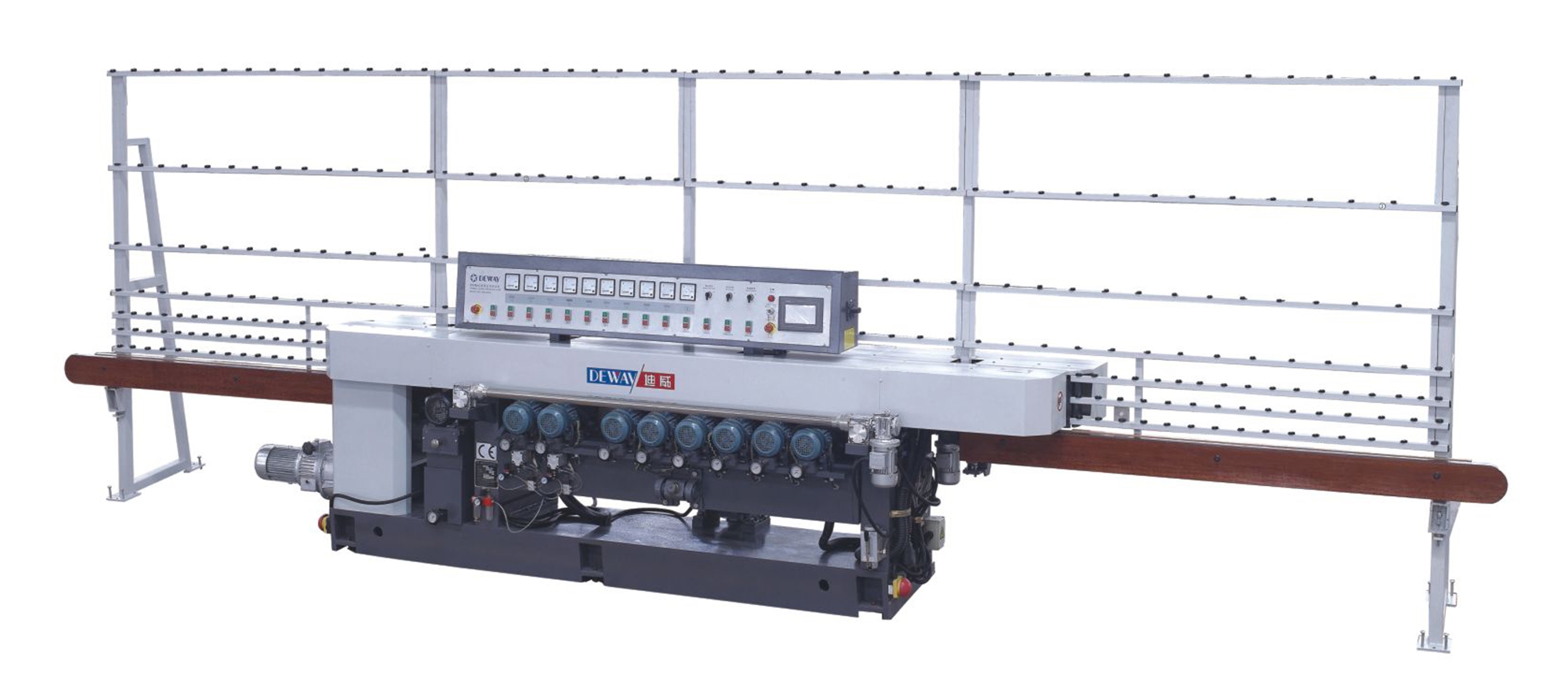
The 11-head straight-line bevelling machine introduced here is a PLC-controlled unit that focuses on the bevel grinding and polishing of flat glass. It is equipped with 11 grinding heads, enabling it to complete rough grinding, fine grinding, polishing, and bottom-edge finishing in a single pass. The maximum bevel width it can handle is 50 mm, which places it among the more capable machines in its category.
2. Structural Design Features
2.1 The Lifting Mechanism
One of the distinctive aspects of this machine is its adoption of a unified feeding and lifting mechanism for the entire bevel grinding head assembly. In conventional designs of glass bevellers, the adjustment of bevel parameters is often achieved by raising or lowering the front beam or the rear beam. The front-beam lifting method involves moving the front pressure plate and associated parts, while the rear-beam approach requires simultaneous movement of the rear beam and the conveying table. Such designs can introduce complexity and potential instability over time.
In contrast, the present model integrates all bevel grinding heads into a single unit that moves as a whole for both feed and lift adjustments. According to the manufacturer, this configuration contributes to a simpler mechanical structure, better operational stability, and more consistent grinding precision.
2.2 Materials and Key Components
The machine's main structural parts—including the base, main beam, swing frame, columns, and head holders—are made of high-density castings, which provide rigidity and dampen vibration during operation. The front and rear chain plates are fabricated from thickened steel plates, offering high strength, resistance to deformation, and good wear resistance, thus ensuring smooth glass conveyance. Similarly, the front and rear pressure plates are also made of heavy-gauge steel to maintain stable clamping and transmission. Each grinding head is powered by a dedicated motor that is said to deliver reliable performance with moderate energy consumption and long-term durability. These material choices are aimed at maintaining processing accuracy even under continuous production schedules.
3. Control System and Automation Level
The machine is equipped with a programmable logic controller (PLC) and a user-friendly human-machine interface (HMI). Operators can set the required parameters—such as glass thickness, bevel width, bevel angle, and feed speed—through the touchscreen panel. Once the settings are confirmed, the system automatically adjusts the mechanical positions of the grinding heads and conveying components to match the desired specifications.
Depending on the specific configuration, some versions of this machine also feature a proprietary control software that simplifies the input of bevel width values and automatically calculates the corresponding adjustments. During operation, the machine performs the entire sequence from rough grinding to polishing in one continuous process. The conveying speed is regulated by a frequency converter, allowing stepless adjustment between 0 and 8 metres per minute to suit different glass types and finishing requirements. This level of automation reduces the need for manual intervention and helps maintain consistent quality across batches.
4. Technical Specifications
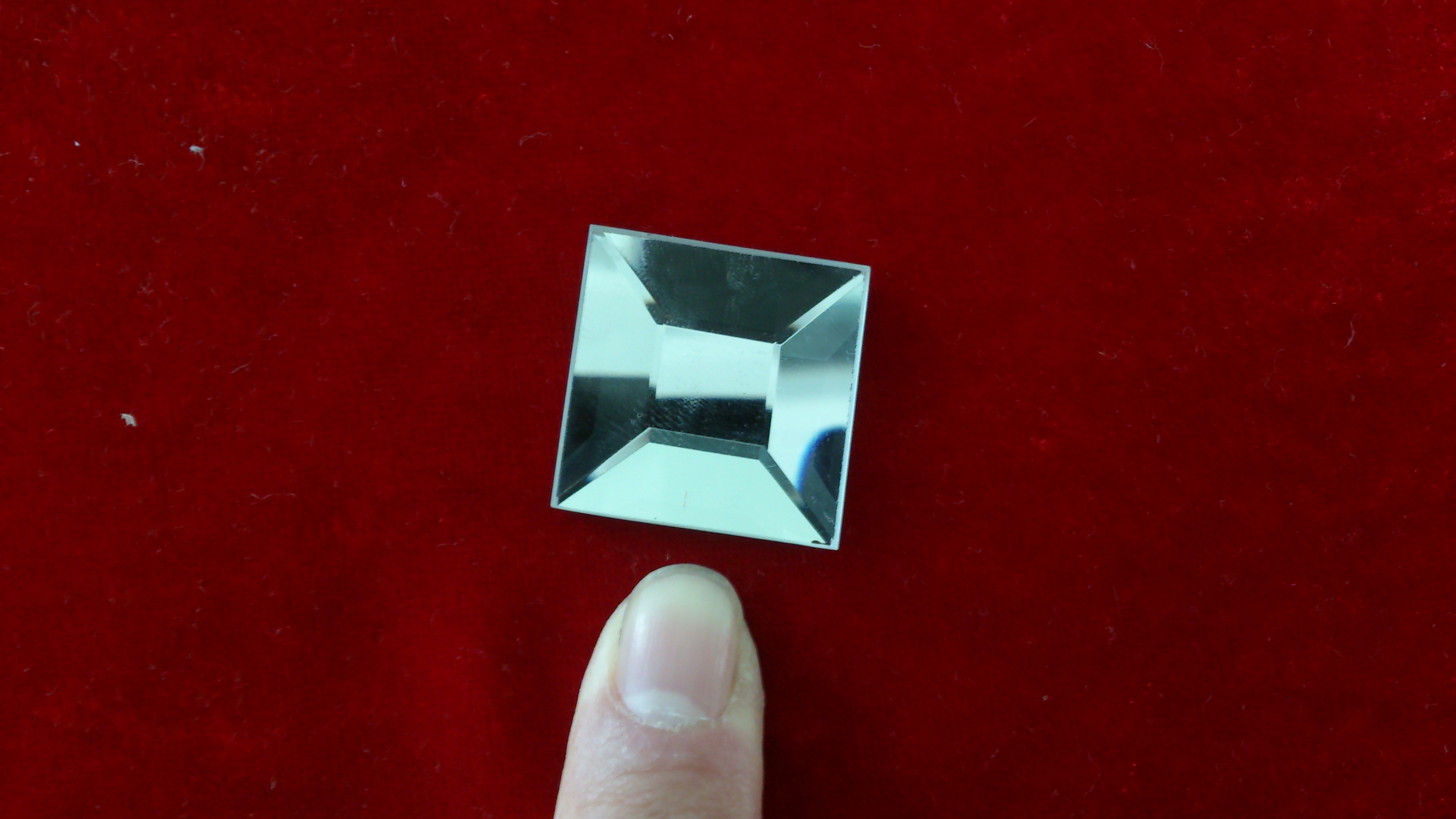
The main parameters of this 11-head bevelling machine are as follows. The number of grinding heads is fixed at 11, with each head assigned to a specific stage of the grinding and polishing cycle. The smallest glass piece that can be processed measures 20 mm by 20 mm, which makes the machine suitable for small decorative items such as mosaic tiles. The maximum bevel width reaches 50 mm, a figure that covers most common decorative and functional bevel requirements in furniture and architectural glass.
The processing speed is adjustable from 0 to 8 metres per minute, allowing operators to balance productivity and surface finish. The machine can handle glass thicknesses ranging from 3 mm to 19 mm, though slight variations may exist between different models from different manufacturers. The bevel angle can be set between 0° and 45°, again with possible minor differences depending on the specific version. Total installed power is approximately 22.5 to 24.5 kW, and the overall weight of the machine is about 4,000 to 5,000 kg. These figures are typical for medium-to-large bevelling equipment and reflect the robust construction required for heavy-duty operation.
5. Grinding Head Configuration and Process Flow
With 11 heads available, the machine allocates them to different functions in a sequential layout. Typically, the first few heads perform rough grinding to remove the bulk of material and shape the bevel. The middle heads carry out fine grinding to smooth the surface and reduce scratch marks. The latter heads are dedicated to polishing, using finer abrasives to achieve a glossy, transparent finish. In addition, at least one head is assigned to grind the bottom edge of the glass, ensuring that the bevel meets the bottom surface cleanly and without chipping.
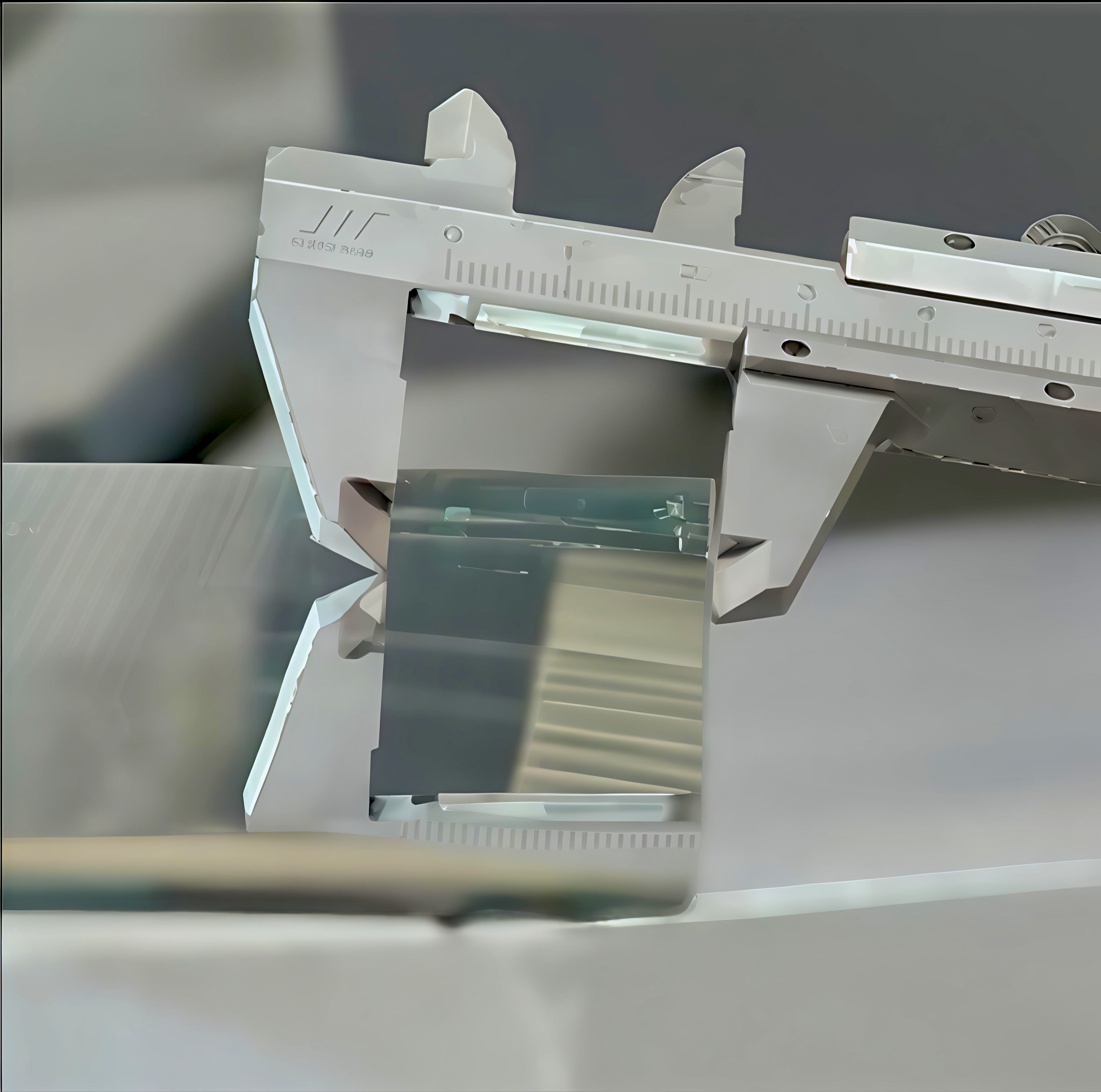
As the glass moves along the conveyor, it passes under each head in turn. The entire processing cycle—from raw edge to finished bevel—is completed in a single pass, eliminating the need to transfer the workpiece between different machines for intermediate steps. This not only saves time but also minimizes handling-induced defects. The resulting bevel surface exhibits a high degree of smoothness and transparency, often requiring no further manual polishing.
6. Application Fields and Integration with Other Equipment
Given its technical capabilities, this bevelling machine is well suited for a range of glass products that require straight bevels. In the decorative mirror sector, it is commonly used for producing bevelled mirror tiles for KTV interiors, wall panels, and mosaic-style compositions. In furniture manufacturing, it can process tabletops, cabinet doors, and shelving glass that demand a refined edge appearance. For door applications, it handles the bevels of glass panels used in grid-style doors (often called “puzzle doors” in some markets). Additionally, it is applicable to shower enclosures and various interior decorative glass items where aesthetic edge finishing is desired.
In a typical production line, this Glass Straight-line Bevelling Machine often works in conjunction with other equipment. For instance, a Glass Double Edging Machine may be used first to precisely size the width of the glass and grind the two parallel edges flat. Then the bevelling machine takes over to create the bevel on one or more edges. After that, an Automatic Horizontal Glass Washer is employed to clean the glass surface thoroughly, removing any dust or abrasive residue from the grinding process, so that the finished piece is ready for assembly or packaging.
For products that require curved or irregular edge shapes—such as round tabletops or decorative panels with contoured outlines—an Irregular Shape Edging/Beveling Machine would be used. That type of machine complements the straight-line beveller, as the latter is optimized for linear edges. Therefore, this 11-head model is not a replacement for all edge-processing needs but rather a specialized solution for straight bevel applications, particularly where high throughput and consistent quality are essential. Its design and parameters make it a practical choice for workshops that produce bevelled glass in medium to large volumes, especially for furniture, mirror, and door components.