

A practical summary from production floors on how to improve quality, reduce breakage, and ensure safety.
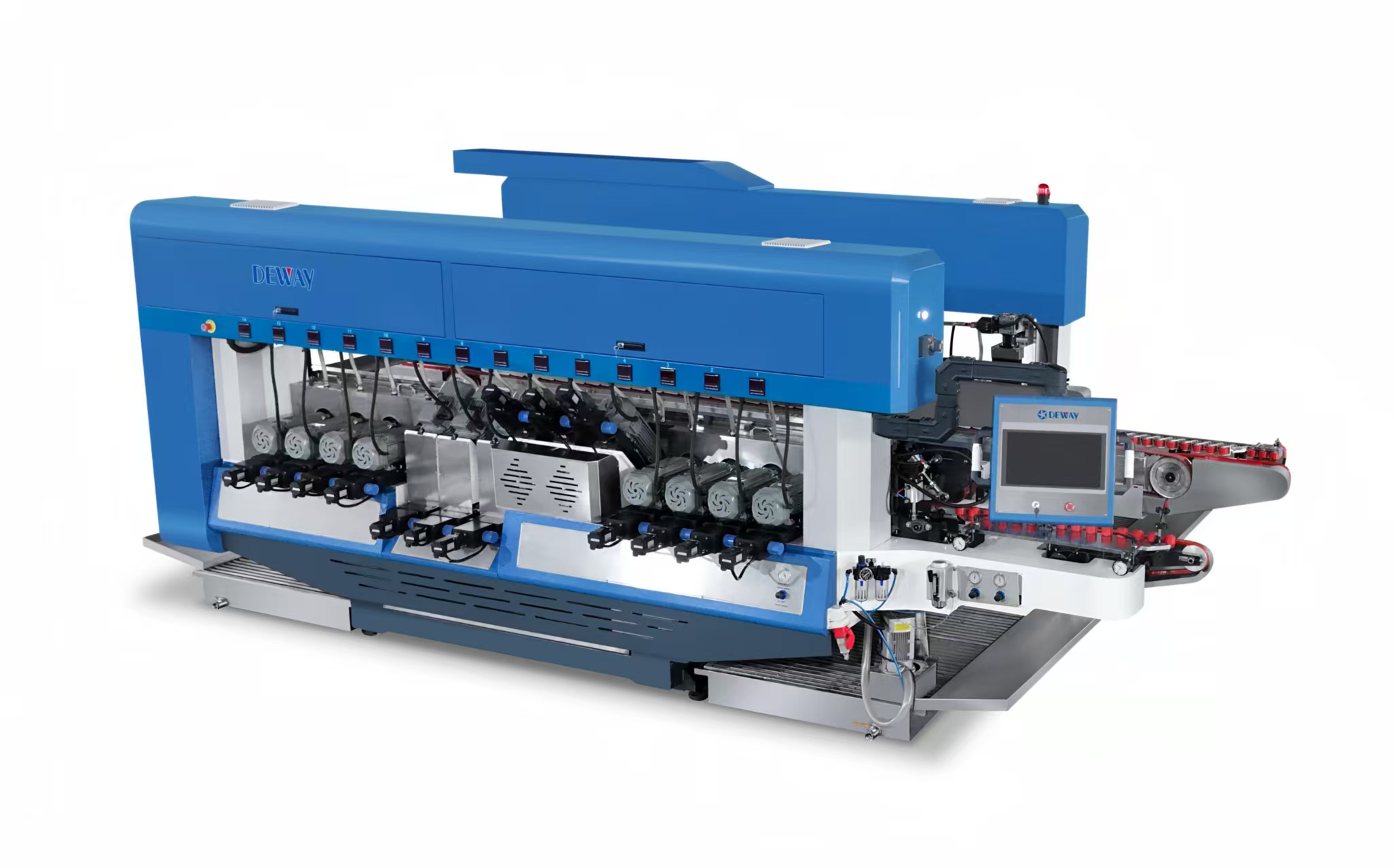
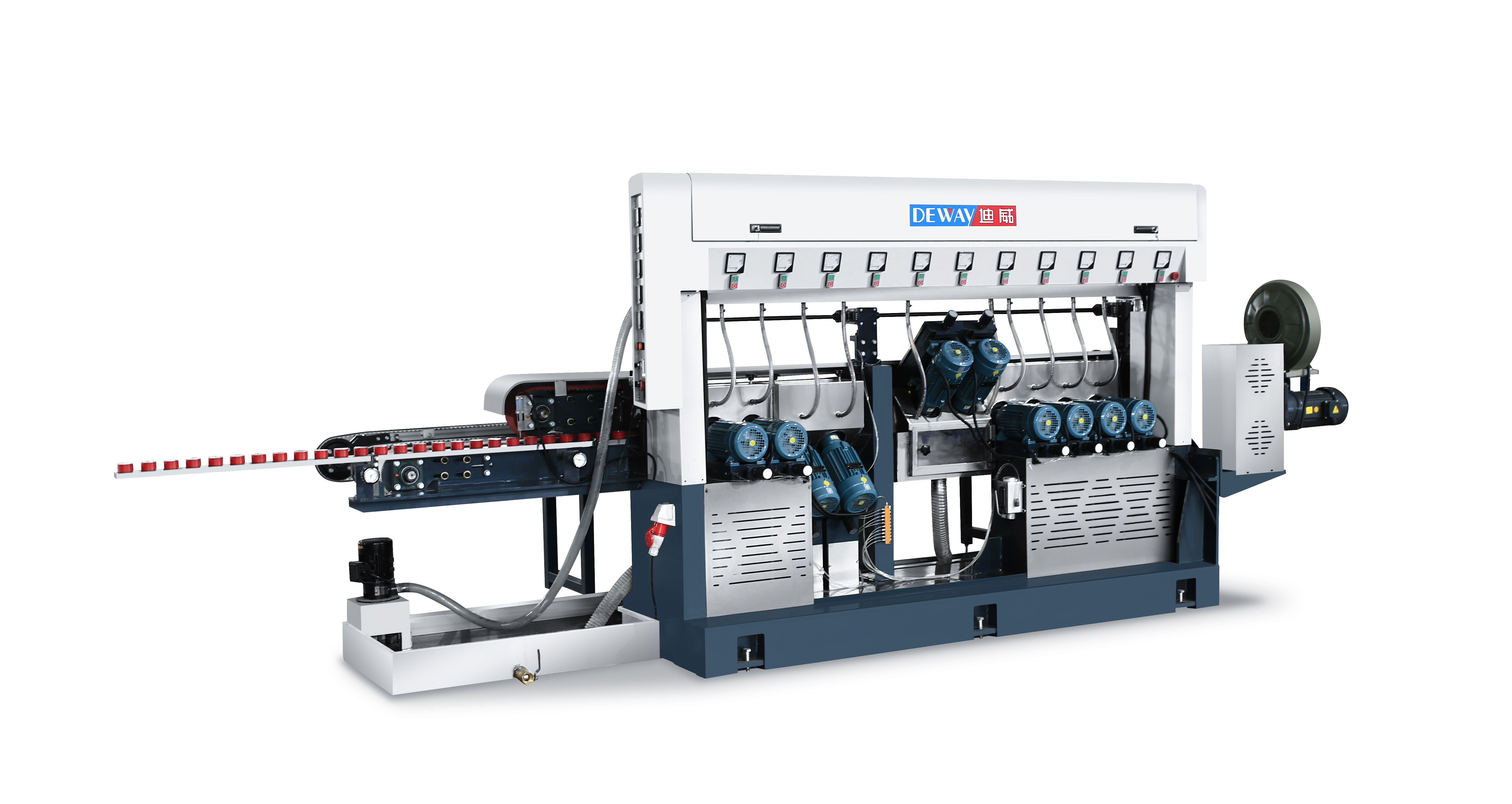
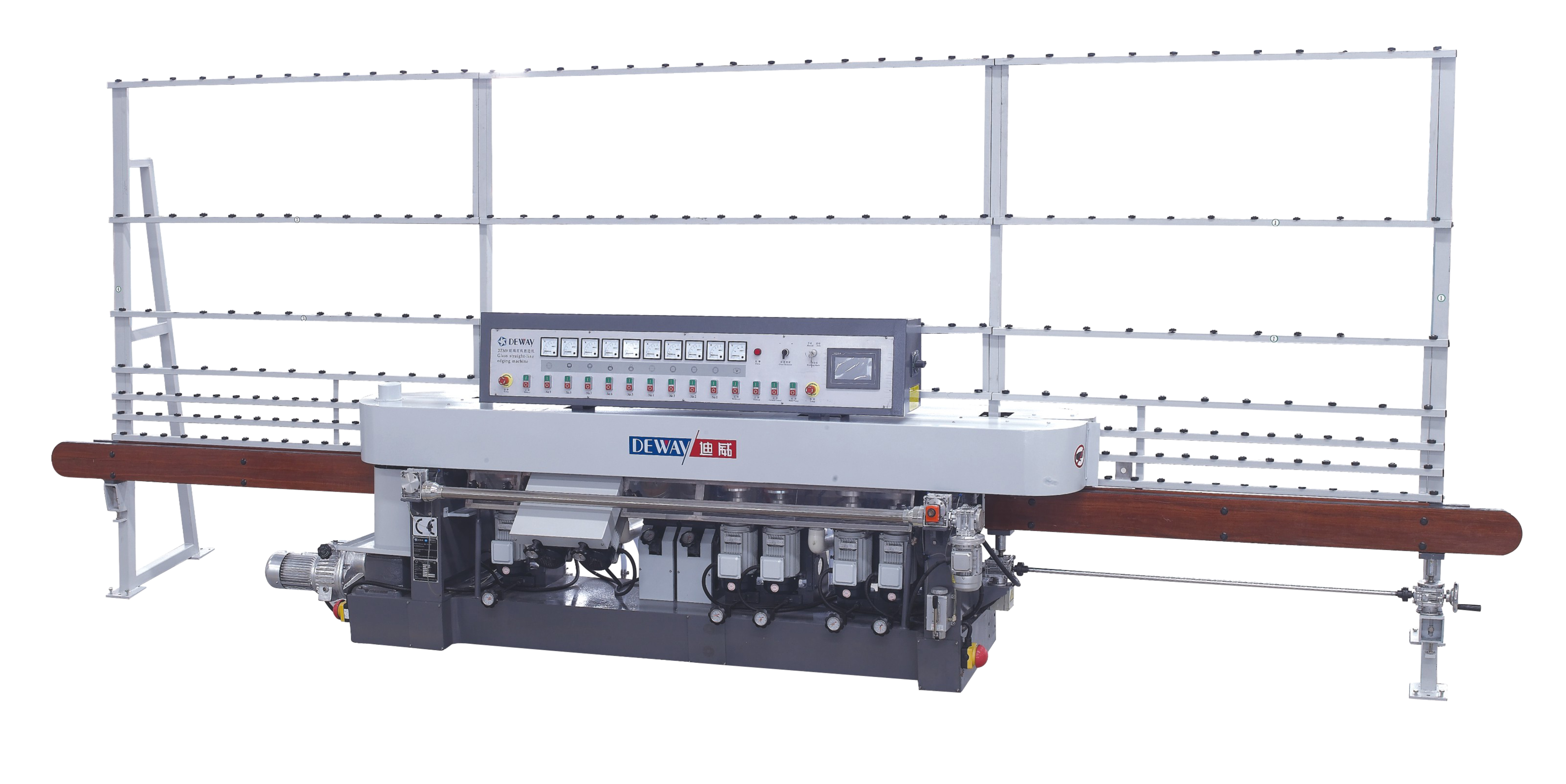
In glass processing, edging operations directly affect product appearance, assembly precision, and yield. Various machines are commonly used, including Glass Double Edger Machine, Glass Straight-line Edging Machine, Precision Glass Beveling Machine, Glass Mitering Machine Ball Bearing, and Flat Glass Washing Machine. Although each machine has different working principles, many operational control principles are shared across them. Based on years of hands-on experience, operators have summarized a set of universally applicable key points covering grinding wheel usage, parameter matching, handling methods, quality inspection, and finished product protection. These are presented below for industry reference.
1. New Grinding Wheels Must Be Dressed Before Use
After a grinding wheel is replaced, its abrasive layer is not yet fully exposed. Using it directly leads to low cutting efficiency, slipping, overheating, and edge chipping. This requirement applies to all edging equipment, including Glass Double Edger Machine, Precision Glass Beveling Machine, and Glass Mitering Machine Ball Bearing. In practice, the wheel should be dressed using waste glass or ceramic blocks until the abrasive layer is evenly exposed and cutting becomes stable. Only then can normal production resume.
2. Feed Rate and Stock Removal Must Be Matched to Glass Thickness
Different glass thicknesses require different edging parameters. Field experience shows:
- For glass up to 8mm thick, single-side stock removal should be kept within 2.5mm, and feed speed should not exceed 2.5 m/min.
- For glass between 10mm and 19mm thick, single-side stock removal should be within 1.5mm, and feed speed should be below 1.5 m/min.
Exceeding these ranges significantly increases the risk of glass breakage. When operating a Glass Double Edger Machine, special attention must be paid to balancing the stock removal on both sides.
3. Always Take Glass Sheets from the Outside In
When stacked glass sheets are stored, the gap between adjacent pieces is very small. Pulling a sheet arbitrarily from the middle easily causes edges to strike each other, resulting in chipping or even complete breakage. The correct method is to start from the outermost sheet and work inward, ensuring only the exposed glass is moved at any time. This handling rule applies to the loading stage of all edging equipment.
4. Inspect Every Piece After Edging; Non-conforming Glass Must Not Go to Next Process
After edging, operators should promptly check the smoothness of the four edges, dimensional accuracy, and any obvious chips or grinding marks. Any piece with defects should be isolated and not allowed to move downstream. For glass processed on a Precision Glass Beveling Machine, additional checks are needed for the bevel width uniformity and surface smoothness.
5. Shaped Glass Must Be Edged Strictly According to Template or Drawing
For shaped glass such as circles, ovals, or arcs, edging must strictly follow the customer-provided template or geometric drawing. The finished edge must be smooth and clean. Path deviations or uneven grinding will affect assembly fit and overall appearance. When using a Glass Mitering Machine Ball Bearing for shaped workpieces, special care must be taken to ensure smooth transitions between different edge profiles.
6. High-End Glass Must Meet or Exceed Automotive-Grade Surface Quality
For products with extremely high surface quality requirements (e.g., premium display cabinets, decorative mirrors), the inspection standard should be equal to or even stricter than that for automotive glass. Scratches, bubbles, water stains, and grinding wheel marks must be kept to a very low limit to achieve a high-gloss, low-defect finish.
7. Large Glass Sheets (Over 3 m²) Require Hooks and Suction Cups; Multi-person Transport Must Be Synchronised
Large sheets with an area exceeding 3 m² must be handled and loaded using dedicated lifting hooks and suction cups. No bare-handed lifting is allowed. When multiple persons are needed to carry a sheet, running is prohibited, and all steps must be synchronised to minimise the risk of breakage due to swaying or injury to personnel.
8. When Stacking Mixed Sizes, Use Paper Separation at Contact Points
After edging, when stacking glass sheets of different sizes (length × width) in the same pile, isolation paper (approximately 100mm × 200mm) or thin cotton rope should be placed at the corners where edges contact each other. This effectively prevents scratches caused by mutual friction. For high-surface-quality products, separation material is recommended for every layer even if the sizes are identical.
9. Check the Cooling Water System Regularly – Never Run Dry
During edging, cooling water reduces grinding wheel temperature and flushes away glass dust. Operators should regularly check that nozzles are unobstructed and water flow is adequate. Insufficient cooling water will cause wheel overheating, whitening or burning of the glass edge, adversely affecting both product quality and equipment life.
10. Perform a Quick Daily Pre-start Check; Wear Protective Gear During Operation
It is advisable to perform a quick check every day before startup: verify that grinding wheels are tight, that no broken glass remains on the conveyor belt, and that the water tank and pipes are clean and clear. During operation, operators should wear safety glasses and non-slip gloves, and avoid loose sleeves to reduce the risk of flying debris and mechanical entanglement.
11. Final Step: Clean the Glass After Edging
After edging, glass surfaces often retain grinding powder and coolant residue. Before the glass moves to subsequent processes, it is strongly recommended to use a Flat Glass Washing Machine to thoroughly clean the surface. This prevents dried-on water spots or scratches that would otherwise affect the final appearance quality.
All the above points come from repeated field validation and lessons learned in actual production. They provide strong practical guidance. Individual processing plants are encouraged to further refine their own operating standards based on their specific equipment types, glass varieties, and product requirements.