
When people hear the term “organic glass,” they often assume it belongs to the same family as windowpanes or drinking glasses. But is that accurate? The short answer is no. Organic glass – also known as acrylic or by its chemical name polymethyl methacrylate (PMMA) – is actually a synthetic plastic. It was first developed in the early 20th century as a shatter‑proof alternative to traditional glass, and over the decades it has become one of the most widely used transparent materials in the world. From fighter jet canopies and bulletproof barriers to advertising light boxes and dental prosthetics, organic glass is everywhere. This article explores what organic glass really is, its outstanding properties, and how it compares to ordinary glass and the machines used to process it.
1. A Brief History of Organic Glass
The story of organic glass begins in the 1920s. In 1927, chemists experimenting with acrylate monomers produced a sticky, rubber‑like substance that showed promise as an unbreakable interlayer for safety glass. By 1931, industrial methods for producing methyl methacrylate polymer had been developed, making the material commercially viable. The new product was marketed under various trade names, such as Plexiglas and Perspex. During World War II, it was used extensively for aircraft canopies and gunner turrets because it was transparent, lightweight, and could stop small fragments. After the war, organic glass found its way into countless civilian applications, from car tail lights to bathroom fixtures. Today, it is often called “acrylic” or simply “organic glass,” though technically it is a plastic, not a glass.
2. Key Characteristics of Organic Glass
Organic glass is prized for four main characteristics: high transparency, high mechanical strength, light weight, and ease of processing. Let us examine each of these in detail.
2.1 High Transparency
One of the most impressive features of organic glass is its optical clarity. Laboratory measurements show that over 92% of visible light passes through a clear acrylic sheet. Even more remarkable is its performance with ultraviolet light. Ordinary window glass blocks about 99.4% of UV rays, allowing only 0.6% to pass through. Organic glass, by contrast, transmits up to 73% of ultraviolet light. This makes it the material of choice for applications where UV transmission is beneficial, such as tanning beds, plant growing chambers, and certain medical devices. Quartz glass transmits even more UV, but it is far more expensive and difficult to shape. For most practical purposes, organic glass offers the best balance of cost, clarity, and UV performance.
2.2 High Mechanical Strength
Many people assume that anything called “glass” must be brittle. Organic glass proves otherwise. Its long polymer chains give it a relative molecular mass of around two million, and the chains themselves are flexible, allowing the material to absorb impacts without cracking. Compared with ordinary glass, organic glass is 7 to 18 times stronger in both tensile strength and impact resistance. A particularly interesting variant is produced by heating and stretching the material. This oriented acrylic has its polymer chains aligned in a specific direction, dramatically increasing toughness. In tests, a nail driven through such a sheet will not cause cracks, and even a bullet fired at it will not produce shards. For this reason, stretched and heat‑treated organic glass is used as bulletproof glass and for fighter aircraft canopies. It provides a level of safety that ordinary glass can never achieve.
2.3 Light Weight
Density is another area where organic glass shines. At just 1.18 grams per cubic centimeter, it weighs about half as much as ordinary glass, which has a density of approximately 2.5 grams per cubic centimeter. This weight saving is critical in transportation, aerospace, and portable structures. A large skylight made of organic glass puts far less stress on its supporting frame than one made of ordinary glass. Similarly, automotive tail light covers and instrument clusters benefit from the reduced weight, contributing to better fuel efficiency and easier assembly. For the same reason, acrylic is often used in large‑scale advertising displays and trade show booths, where ease of transport and installation is a major advantage.
2.4 Easy to Process
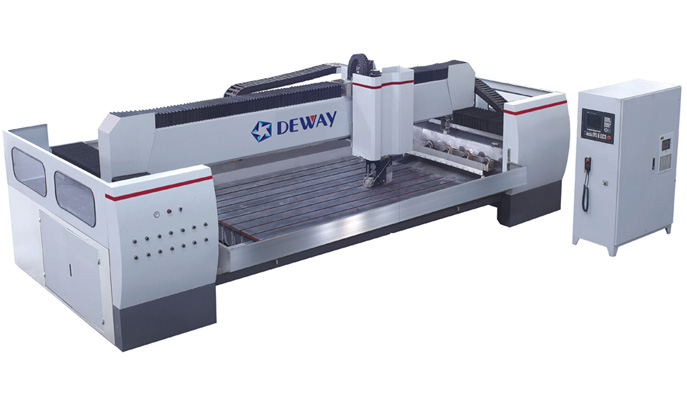
Perhaps the most practical advantage of organic glass is its workability. Ordinary glass requires heavy, specialized machinery for cutting, drilling, and shaping. For example, glass fabricators use an automatic glass double edging machine to grind both edges of a glass sheet simultaneously, ensuring parallel sides and smooth finishes. A horizontal glass edging machine is often employed for smaller or more delicate edges. After edging, the glass must be thoroughly cleaned before coating or laminating, which is where an automatic glass washing machine comes into play, using brushes, water jets, and air drying to achieve a pristine surface. If a decorative or functional beveled edge is needed, a glass straight‑line bevel machine creates that angled finish. For more intricate designs – patterns, grooves, or textures – a CNC glass grooving machine follows computer‑aided designs to carve precise features.
Organic glass, by contrast, can be worked with standard woodworking or metalworking tools. It can be cut on a lathe, drilled with a standard drill bit, and polished with simple abrasives. It can be bonded using solvents such as acetone or chloroform, allowing complex assemblies without mechanical fasteners. Furthermore, organic glass can be shaped by blow molding, injection molding, and extrusion – processes that are impossible with ordinary glass. This versatility enables the production of everything from massive aircraft canopies to tiny dental implants and model train windows. While high‑volume production of acrylic may still benefit from CNC routing and specialized cutting tables, the barrier to entry is far lower than for silicate glass.
3. Major Applications of Organic Glass
Thanks to its unique properties, organic glass has found its way into a stunning variety of applications.
Transportation: In the automotive sector, organic glass is used for headlight lenses, tail light covers, instrument panels, and some sunroofs. Its light weight helps meet fuel economy standards, and its impact resistance reduces the risk of shattering in collisions. In aviation, stretched acrylic canopies protect pilots while offering excellent optical clarity.
Architecture and Construction: Skylights, domes, sound barriers along highways, and transparent walls in public buildings often use organic glass. It is especially popular in regions where hail or vandalism might break ordinary glass. Greenhouses benefit from its high UV transmission, which promotes plant growth. Additionally, acrylic is used for bath tubs, shower enclosures, and decorative panels.
Medical and Laboratory Equipment: Medical incubators, dental prosthetics, cuvettes for spectrophotometers, and fluid handling components are frequently made from organic glass. Its transparency allows easy observation, while its chemical resistance ensures compatibility with many disinfectants and reagents.
Advertising and Displays: Walking through any commercial district, one sees acrylic everywhere: illuminated signs, light boxes, shelf displays, point‑of‑purchase stands, and model making. Acrylic can be backlit to produce a glowing effect, and it can be thermoformed into three‑dimensional shapes that ordinary glass cannot achieve.
Defence and Security: Stretched acrylic is used in bulletproof glazing, riot shields, and aircraft canopies. Its ability to stop projectiles without spalling (sending sharp fragments flying) makes it far safer than ordinary glass in explosive or ballistic events.
4. Market Outlook and Future Trends
The global market for organic glass (acrylic sheet and PMMA) has been growing steadily. Projections suggest that by 2025, the market could exceed US$15 billion annually. Several trends are driving this growth: lightweighting in electric vehicles, green building codes that reward recyclable materials, the DIY and maker movement, and advances in scratch‑resistant coatings. At the same time, manufacturers are investing in low‑energy production methods and bio‑based monomers, aiming to reduce the carbon footprint of PMMA. Recycling technologies are also improving, allowing closed‑loop reuse of acrylic waste.
5. Conclusion
So, is organic glass really glass? No – it is a transparent plastic that outperforms traditional glass in transparency, strength, weight, and ease of shaping. While ordinary glass relies on heavy machines such as the automatic glass double edging machine, horizontal glass edging machine, automatic glass washing machine, glass straight‑line bevel machine, and CNC glass grooving machine to achieve finished forms, organic glass can be transformed with simple tools. Its unique combination of properties has made it an indispensable material in modern life – from the cockpit of a fighter jet to the simple light box on a city street. And although the name “organic glass” is technically a misnomer, it accurately reflects the material’s glass‑like appearance and its polymer (organic) chemistry. For that reason, the name is likely to remain in use for many years to come.