
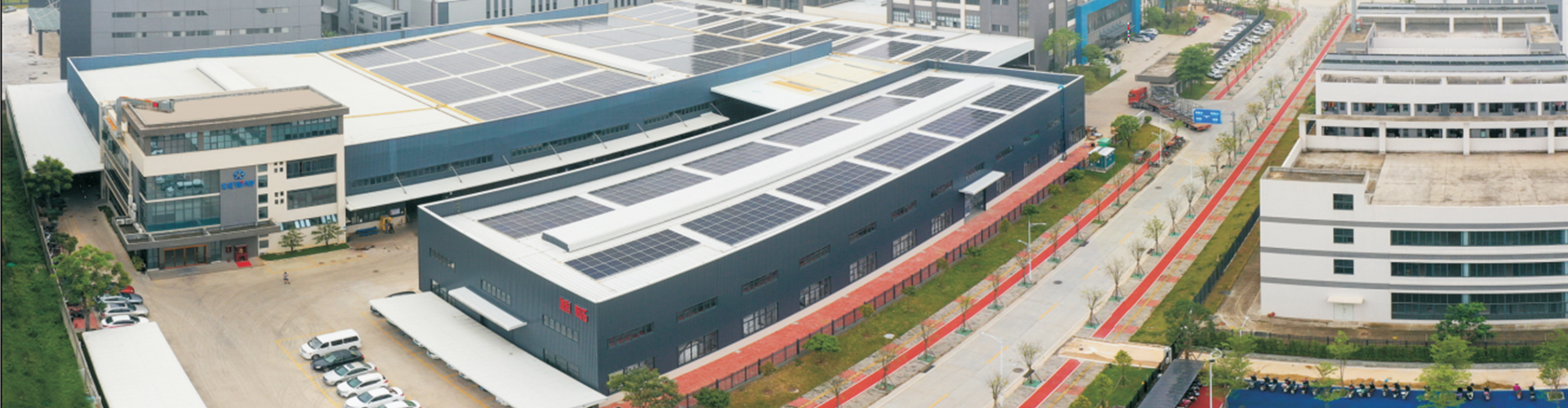
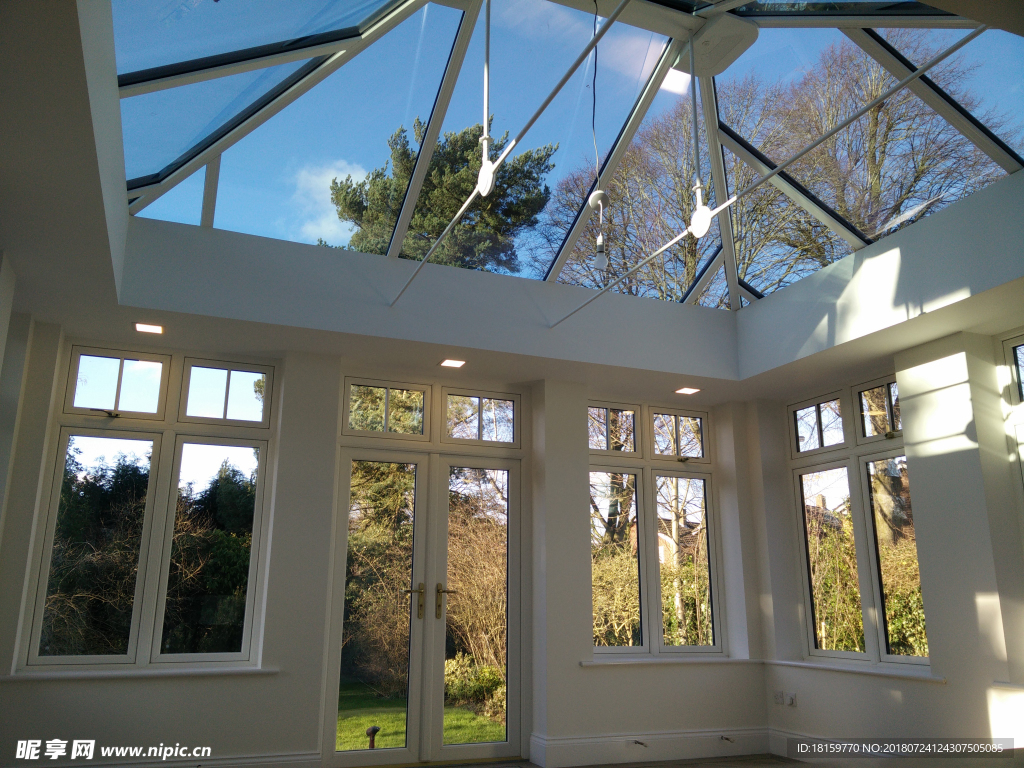
From window panes to spacecraft components, glass has become a cornerstone of modern industry. Its composition diversity and processing sophistication now reflect a nation's manufacturing strength. Understanding glass chemistry and the technology behind its fabrication offers a unique window into global industrial progress.
1. Material Foundations: The Diverse Composition of Glass
1.1 Ordinary Glass and Its Variants
The most familiar type is ordinary glass (soda-lime-silica glass), composed of sodium silicate, calcium silicate and silica, with the simplified formula Na₂O·CaO·6SiO₂. It dominates construction, automotive and household applications.
However, the glass family extends far beyond this.
- Fused quartz glass – made from pure silica (SiO₂) – offers exceptional heat resistance and UV transparency, making it vital for aerospace and semiconductor industries.
- Tempered glass shares the same composition as ordinary glass but is strengthened physically or chemically.
- Potash glass (K₂O, CaO, SiO₂) improves chemical durability.
- Borosilicate glass (SiO₂, B₂O₃) provides high thermal stability for labware.
- Colored glass is produced by adding metal oxides: Cu₂O (red), CuO (blue-green), Co₂O₃ (blue), MnO₂ (purple), colloidal Au (red) or Ag (yellow).
- Photochromic glass uses rare-earth oxides to change tint with light intensity.
- Optical glass adds AgCl, AgBr and CuO to borosilicate glass, making it light-sensitive for precision optics.
- Radiation-shielding glass incorporates lead oxide (for X-rays and gamma rays), chromium or iron oxides (for UV, IR and intense visible light) to protect personnel.
- Rainbow glass adds fluorides, sensitizers and bromides.
- Glass-ceramics (crystallized glass) add Au, Ag or Cu as nucleating agents, used in radar domes and missile cones.
- Glass fibers have the same composition as bulk glass and are drawn or blown into fine filaments.
- Fiberglass (glass-reinforced plastic) combines epoxy resin with glass fibers for strength similar to steel.
- Cellophane is a transparent cellulose film made from viscose solution.
- Water glass (Na₂SiO₃ solution) is named for its compositional similarity to ordinary glass.
- Metallic glass (amorphous metal) is produced by rapid cooling of molten metal.
- Fluorite (CaF₂) serves as prisms and lenses in optical instruments.
- Acrylic glass (PMMA) is a transparent thermoplastic alternative to silicate glass.
1.2 Key Deep-Processing Equipment
To transform raw glass into high-performance products, precise machinery is essential.
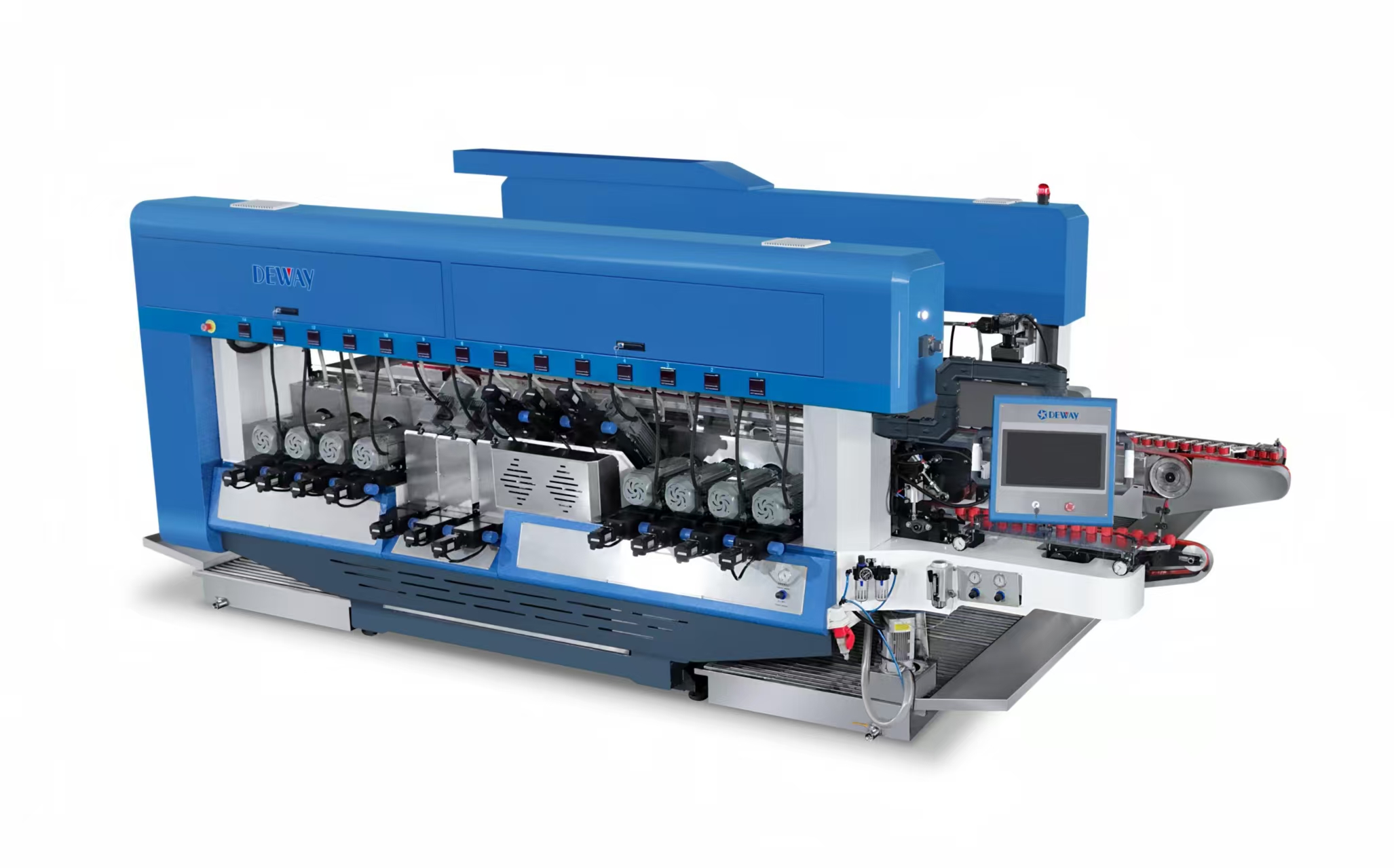
- Glass double line edging machine – processes two parallel straight edges of flat glass in one pass, integrating rough grinding, fine grinding, polishing and safety chamfering.
- Glass edge polishing machine – a fundamental tool for straight-edge grinding, arris shaping and polishing, offering high rigidity and precision.
- Glass Mitering Edging Machine – grinds and polishes straight-line flat edges while creating multi-level corner profiles, all in a single cycle.
- Glass Straight-line Bevel Machine– specializes in producing polished, light-catching beveled edges on flat glass, combining rough grinding, fine grinding, polishing and bottom-edge grinding.
- High speed horizontal Glass Washer – ensures immaculate surface cleanliness through brush washing, fresh water rinsing, deionized water rinsing and hot/cold air drying, a prerequisite for subsequent processes like coating, tempering and insulating glass assembly.
2. Industry Dynamics: Challenges and Smart Transformation
2.1 Current Market Landscape
China's flat glass sector is undergoing significant adjustment. In 2026, nationwide flat glass production reached 296 million weight cases, down 5.8% year-on-year. Daily melting capacity fell to a historic low of 145,000 tons due to accelerated furnace cold repairs.
Yet demand has shown resilience, supported by secondary housing, automotive and home appliance markets. Float glass sales declined by only 1.7% (2024) and 6.5% (2025), with projections moderating to 4% in 2026 and 3% in 2027.
2.2 The Rise of Intelligent Manufacturing
Industry 4.0 is reshaping glass deep processing. AI and digital technologies are expected to achieve large-scale deployment in glass manufacturing during 2026.
A major Chinese glass technology firm recently completed a fully automated glass facility overseas, producing 2.8 million high-quality panels annually – a new benchmark for digital intelligence. Domestically, a ¥200 million "Glass and Aluminum Star" project has broken ground in central China, aiming to build the region's first fully automated "unmanned factory" for advanced glass deep processing.
Modern glass plants are becoming interconnected ecosystems where real-time data, IoT-enabled devices and automated decision-making optimize production without continuous human intervention.

3. Outlook
From atomic composition to factory automation, glass continues to push boundaries. With increasingly sophisticated equipment – including double line edgers, edge polishers, mitering edgers, bevel machines and high-speed washers – the potential of this ancient yet ever-new material is expanding across architecture, energy, transport and space exploration. The future, quite literally, is taking shape in glass.