
1. Introduction: The Million-Dollar Question
A piece of ordinary flat glass, after secondary artistic processing, can see its price multiply by a hundredfold. This is not fantasy—it is the reality of the art glass industry. From as little as a few dozen dollars to upwards of ten thousand dollars per piece, with thicknesses ranging from 1.5mm to 100mm, any glass that has undergone secondary artistic processing can be classified as art glass.
Entering 2026, China's art glass industry is undergoing a profound supply-side structural transformation. As consumer spending upgrades and aesthetic preferences diversify, painted glass has evolved from a mere "embellishment" in architectural decoration to a "core element" of spatial narrative. With hundreds of manufacturers coexisting and craftsmanship levels varying widely, the synergy of equipment across the entire processing chain—from primary shaping to fine finishing—has become the decisive factor in product quality and artistic value.
2. The Five Categories of Painted Art Glass and Processing Considerations
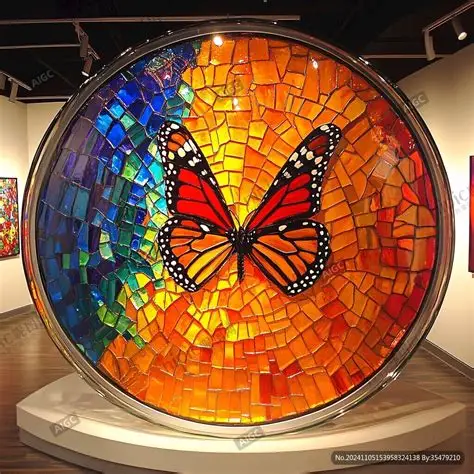
Painted art glass can be classified into the following varieties based on visual effect:
Opalescent Glass—One or more colors blended with white porcelain to create a vibrant, multi-hued effect, allowing varying levels of light to pass through. Before coloring, the glass must undergo safety chamfering using a Glass Single Edging Polisher. For high-volume production of rectangular products, the Glass Double Line Edging Machine can simultaneously grind and polish two parallel edges in a single pass, completing rough grinding, fine grinding, and chamfering in one operation—dramatically improving efficiency.
Wavy Glass—Produced by rolling irregular curves across the glass surface or pressing textured patterns with patterned molds. The edges must be reprocessed with a wavy glass edging machine to ensure shape consistency.
Transparent Colored Glass—Transparent, single-color flat glass with a smooth or textured surface. Before texturing, the glass must first be cleaned using a Glass Washing Machine Horizontal to remove surface contaminants, then edge-ground with a Glass Single Edging Polisher to ensure safe, non-scratching edges.
Flat Glass—The most fundamental glass product, featuring a flat surface. It is the most widely processed material in Glass Single Edging Polisher operations.
Spotted Glass—Produced by carefully controlling the composition of opalescent glass to create partially opaque ring-shaped areas (ring-shaped spots), giving a multi-speckled visual effect. Extra care is required during processing—if spots are created before edging, the grinding process can easily damage them. Here, the precision path control of the CNC Glass Processing Center offers a distinct advantage, effectively avoiding damage to spotted areas.
3. From Embellishment to Core: A Broad Application Landscape
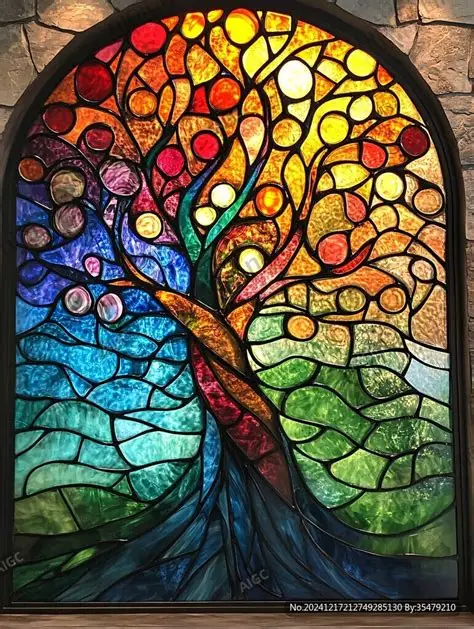
Painted art glass, with its unique character, is being widely adopted in high-end clubs, hotels, bars, villas, and churches. In Europe, the history of painted glass dates back to the Gothic cathedrals of the 11th to 15th centuries—the stained glass Madonna of Chartres Cathedral in France and the "Rose Window" of Notre-Dame de Paris stand as masterpieces of the era. In China, French missionaries introduced painted and stained glass craftsmanship to the Tushanwan Orphanage in Shanghai's Xujiahui district in the 1860s, marking the beginning of the Shanghai-style painted glass tradition.
Today, the application boundaries of painted glass continue to expand—from the lobbies of luxury hotels to the domes of private villas, from installation art in cultural exhibition halls to decorative highlights in commercial spaces.
4. The Machinery Matrix: From the "First Step" to Artistic Presentation
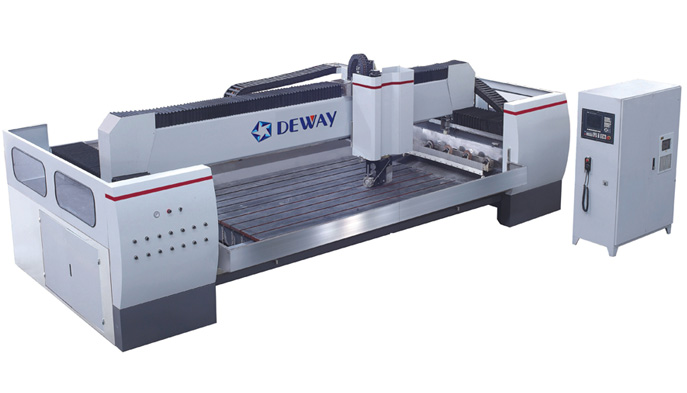
The birth of a piece of painted art glass follows a complete intelligent manufacturing chain: Glass Washing Machine Horizontal removes surface impurities; Glass Single Edging Polisher and Glass Double Line Edging Machine complete safety chamfering and edge finishing; CNC Glass Grooving Machine carves line patterns and grooves; and CNC Glass Processing Center handles complex contour cutting, drilling, milling, and engraving.
The Glass Single Edging Polisher is ideal for custom glass shops and irregular shapes, processing one edge per pass. The Glass Double Line Edging Machine, in contrast, is designed for mass production—typically three times faster than single-edgers, with higher precision and safer operation. These machines can process glass widths from 350mm to 4500mm and thicknesses from 3mm to 25mm.
The CNC Glass Grooving Machine enables the engraving of straight lines and curves on flat glass surfaces, capable of processing 1 to 20 pieces of glass with the same dimensions and design. Any pattern can be designed by engraving grooves in the glass surface, with different profiles and groove widths available and repeatable time after time.
The CNC Glass Processing Center represents the pinnacle of glass processing technology—a multi-functional integrated equipment that combines numerical control technology, precision machinery, and automated software. With just one machine, it can complete grinding, polishing, milling, and drilling. It is used for fine processing of furniture glass, art glass, mirrors, and other decorative glass products.
The Glass Washing Machine Horizontal ensures that glass flows directly from the edging line into the washer without stopping, reducing handling and the risk of scratches. It cleans and dries glass in a single pass, preparing it for printing, tempering, laminating, and glazing.
As industry insiders often remark: "After primary processing with a Glass Single Edging Polisher, followed by secondary artistic treatment, the price of glass can multiply by a hundredfold—turning stone into gold."
5. Market Outlook
As painted glass transitions from religious settings to everyday life, from engineering decoration to home aesthetics, this ancient yet youthful industry is radiating new vitality. For every piece of painted glass, every step of the journey—from cleaning and edging to grooving and engraving—determines whether it can truly "turn stone into gold." And at the heart of this transformation lies the precision, efficiency, and intelligence of modern glass processing machinery: the Glass Single Edging Polisher, the Glass Double Line Edging Machine, the CNC Glass Grooving Machine, the CNC Glass Processing Center, and the Glass Washing Machine Horizontal—the five pillars that are redefining what is possible in the world of art glass.