
Prices crash below cost, 80% of producers operate at a loss – where is the way out?
Today’s Chinese glass industry is enduring a bitter winter. Since June, photovoltaic (PV) glass prices have plunged. The price of 2.0mm single-coated glass has fallen to 11.2 yuan per square metre, meaning many producers lose nearly one yuan on every square metre. Even more worrying, this industry-wide loss is no short-term phenomenon. Longzhong Information data show that in June the theoretical supply-demand imbalance for PV glass reached 380,000 tonnes – 290,000 tonnes worse than in May. In the float glass sector, with real estate floor space under construction falling by more than 20%, market demand continues to shrink.
When grabbing orders at low prices becomes the industry’s “survival rule”, a vicious cycle sets in: the lower the price, the more quality is sacrificed; the poorer the quality, the more desperate the price cutting. But where does this dead end lead?
01. Industry deep freeze: three mountains pressing down
China’s glass industry faces a cold spell. Three heavy mountains weigh on the entire industry.
Demand collapse – Domestic float glass demand exceeds 40 million tonnes per year, with more than 80% tied to real estate. In 2025, completed real estate floor area is expected to fall by 7%–13%, and the average order backlog for deep-processing companies is just 6.2 days – about 30% lower than a year ago.
Chronic overcapacity – As of April 2025, domestic float glass inventory reached 3.274 million tonnes, up 9.3% year-on-year and a surge of 45% from the start of the year. PV glass supply will exceed demand by 380,000 tonnes in June.
Collapsing profits – Average profit for float glass is –15 yuan per tonne; for natural-gas-fired lines, losses reach about –153 yuan per tonne. PV glass loses more than 70 yuan per tonne.
02. Vicious circle: survival trapped by “involution”
Instead of uniting, the industry has fallen into cut-throat competition. Price wars intensify: in early June 2025, many PV glass quotes fell below 11 yuan per square metre – far under cost. Payment terms worsen, with monthly settlement or longer credit periods straining cash flow. To cut costs, some rivals use inferior raw glass and reduce process steps, causing higher rates of spontaneous breakage. This erodes the industry’s reputation.
03. Breaking out: a roadmap for differentiation
Forward-looking companies are exploring three dimensions to build competitive barriers.
Technological innovation – High-value products like energy-saving glass, long-sealed insulating glass and BIPV are becoming market favourites.
Smart manufacturing – Advanced equipment plays a crucial role. The Glass Straight line Edging Polisher ensures precise edge finishing. The Glass Mitering Edging Machine allows seamless corners for high-end projects. The Automatic glass drilling machine increases throughput for customised components. The High speed glass washing machine guarantees contamination-free surfaces before coating. The Glass double edger machine delivers parallel edges at high speed. Together, these technologies help lower costs and improve quality.
Diversifying applications – Automotive glass (NEV penetration >40%), electronic glass (20% annual growth) and overseas markets offer opportunities.
04. Industry self-rescue: from self-discipline to alliance
In April 2025, the Guangdong Provincial Glass Industry Association issued a “Self-discipline Initiative”, calling on companies to maintain market order, encourage healthy competition and promote quality at a fair price. The association will guide capacity adjustments and promote M&As to raise the industrial structure. Policy support, including revised building energy standards, will create market space for high-end glass.
05. Outlook: the darkest hour before dawn
Deep capacity rationalisation is inevitable – equilibrium daily melting capacity must fall to 150,000 tonnes/day, triggering a wave of cold repairs. Urban renewal and existing housing stock will provide new demand. Policy measures like “guaranteeing building delivery” and appliance “trade-in” subsidies could create an incremental market of about 6 billion yuan. Experts expect a full recovery perhaps in the second half of 2026. For now, companies should stick to quality and R&D.
A story of resilience: Deway Machinery shows the way
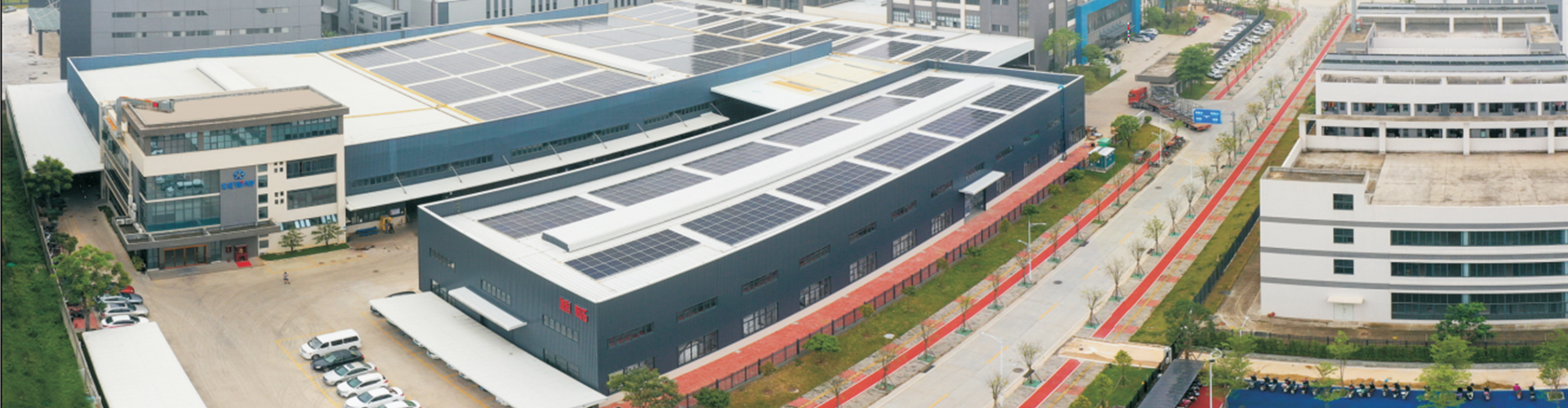
Deway Machinery Co., Ltd – founded in 1998 and one of China’s largest high-tech glass machinery manufacturers – is leading by example. At Deway, a management team inspires innovative designs and quality products. Deway is committed to producing high-performance glass processing machinery that integrates the latest technological developments.
Deway’s main products include CNC glass working centres, Glass double edging machines, Glass straight-line edging machines, Glass Mitering Edging Machines, Automatic glass drilling machines, High speed glass washing machines, and more. Each precision tool helps fabricators improve edge quality, drilling accuracy and washing efficiency – critical when every fraction of a yuan in cost and every point in quality matters.
Deway prides itself on creativity, advanced quality control and outstanding client service. Its recognised brand is built on technical innovation, especially in construction, furniture and solar glass industries. At Deway, the goal is to provide clients with service that fully meets their expectations. As the company continues to expand, it hopes to become not merely a glass machinery supplier but a pre-eminent business partner.