
As architectural glass finds increasingly extensive applications in curtain walls, doors and windows, insulating glass units, and other building components, the glass deep-processing industry has imposed ever-stringent demands on edging equipment in terms of precision, efficiency, and operational stability. According to industry standard JG/T455-2014 Tempered Glass for Building Doors, Windows and Curtain Walls, architectural glass edges must undergo chamfering or three-surface fine grinding, with a minimum chamfer width of 1 mm. Against this regulatory backdrop, a high-performance double straight-line flat edging machine designed for flat glass processing has emerged as an ideal solution for furniture glass and architectural glass fabrication, distinguished by its superior technical configuration and processing capabilities.
A Comprehensive Portfolio of Glass Edging Equipment
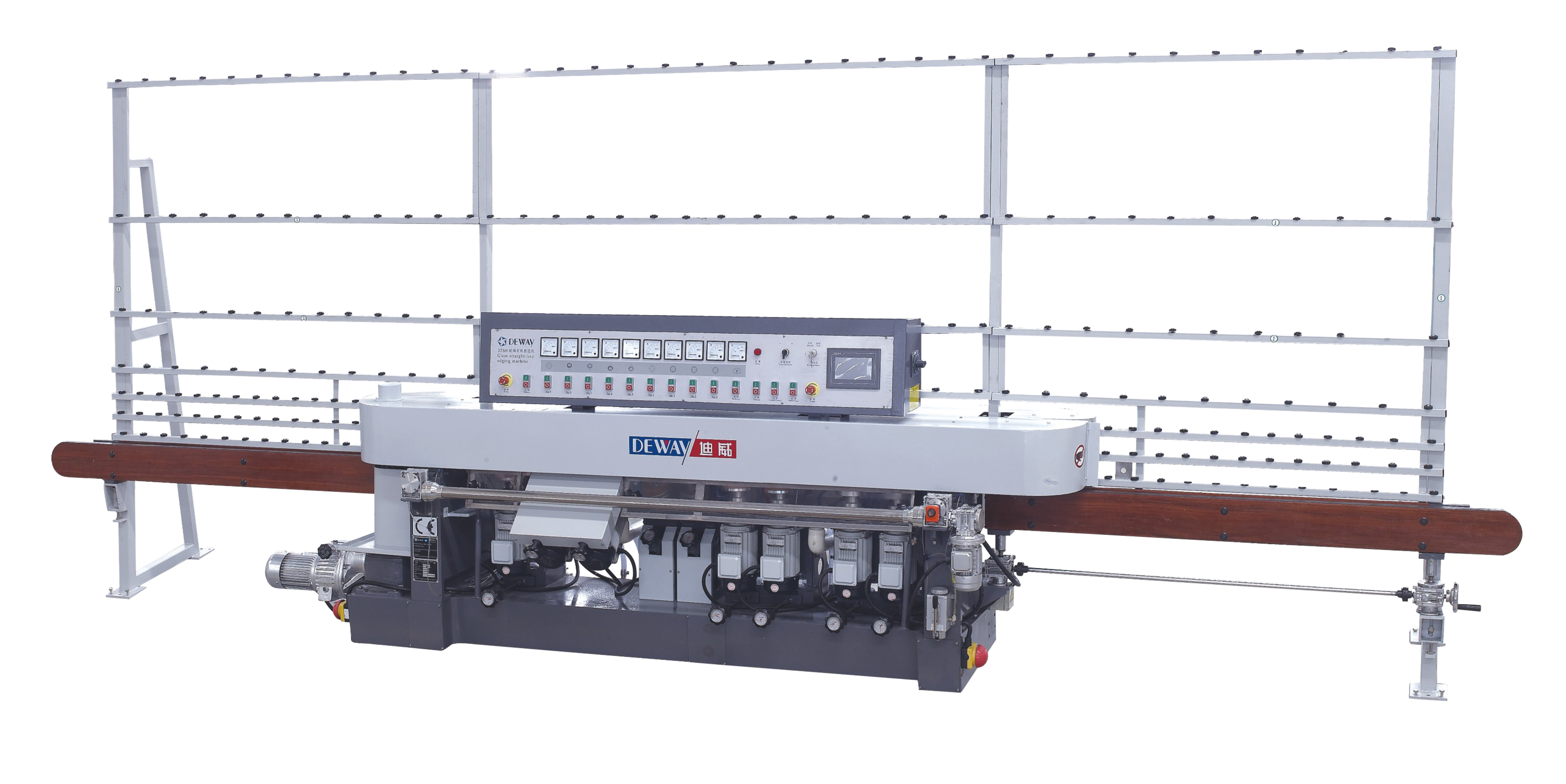
The architectural glass processing sector relies on a diverse array of specialized edging machines, each fulfilling distinct roles in the production workflow. The Glass Grinding machines is primarily employed for grinding and polishing the bottom edges and arrises of flat glass, typically equipped with 4 to 10 grinding spindles. The Glass Double Edging Machine, by contrast, is designed to simultaneously grind two opposite edges of glass panels, featuring 16 to 28 grinding heads to achieve high-throughput mass production. The Glass Variable Mitering Machine builds upon the straight-line edging platform by incorporating multi-level edge grinding capabilities, with front chamfering spindles capable of electric switching between 45° and 90° angles, integrating coarse grinding, fine grinding, polishing, and chamfering into a single pass. The Glass Straight-line Bevelling Machine is specifically suited for bevel grinding of mirror glass surfaces, finding applications across architectural glass, decorative glass, tempered glass, and insulating glass. At the apex of this equipment hierarchy stands the CNC Working Center, which represents the highest level of processing capability, enabling coarse grinding, fine grinding, and polishing in a single operation with applications spanning appliance glass, furniture glass, architectural glass, and electronic glass. It is within this comprehensive equipment matrix that the diverse edging requirements of architectural glass are fully addressed.
Integrated Processing Workflow for Enhanced Productivity
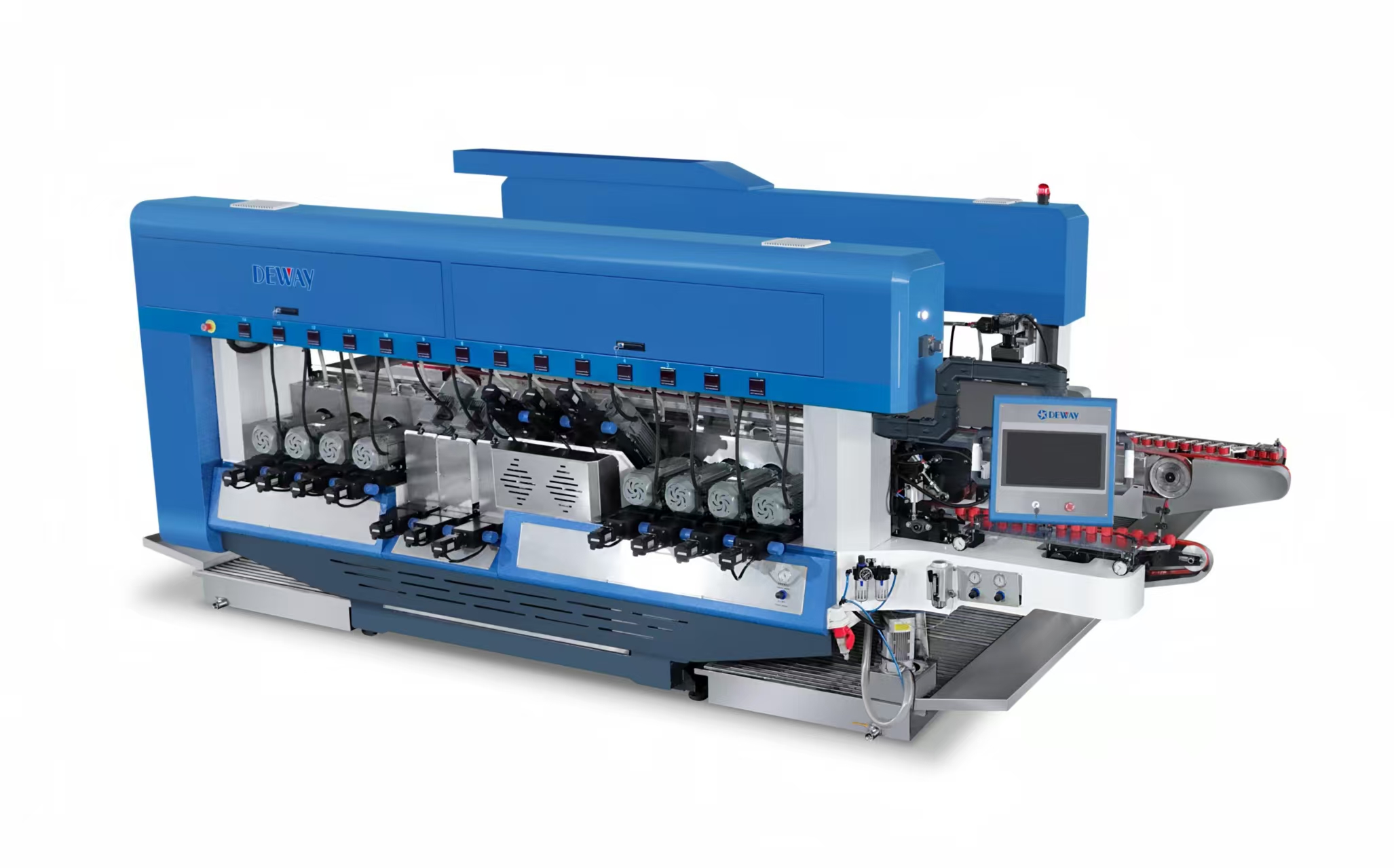
The double straight-line flat edging machine described herein is purpose-built for flat glass edge processing, consolidating coarse grinding, fine grinding, and polishing into a single, uninterrupted operation. Compared with conventional multi-step processing methods, this integrated workflow significantly shortens production cycles, reduces workpiece transfer and fixturing between processes, and effectively lowers both labor costs and rejection rates. The machine accommodates glass thicknesses ranging from 3 mm to 25 mm, with a minimum workable size of 250×250 mm and a maximum processing capacity exceeding 4,000 mm, fully meeting the architectural glass industry's demand for large-format panel processing.
High-Precision Transmission and Slide Systems Ensure Processing Quality
The equipment incorporates industry-leading configurations in its transmission and slide systems. The grinding head slide employs dual linear rolling guides and dual ball screws, effectively eliminating movement clearance, reducing frictional resistance and mechanical wear, and ensuring precise repeatable positioning. The conveying system features high-precision guide rails precision-ground on six faces from high-quality steel, with a dimensional tolerance within 0.02 mm. The overall opening and closing system utilizes ABBA dual linear guides and dual ball screws, further guaranteeing parallelism and operational stability.
Three-Axis Transmission Design for Continuous Operation Reliability
The machine's transmission system adopts a three-axis drive configuration, offering the significant advantage of convenient belt replacement without spindle disassembly. The gearbox is equipped with a Sino-German joint venture K-series helical gear reducer, ensuring 24-hour continuous operation without overheating, motor burnout, or oil leakage. This design enables the equipment to meet the high-volume, long-duration production demands of the architectural glass processing industry, substantially reducing maintenance costs and downtime.
Intelligent Control System for Parameterized Precision Processing
The machine is equipped with a PLC programmable logic control system coupled with a high-end human-machine interface (HMI) touchscreen. Operators can intuitively set processing parameters through the interface, enabling a fully automated workflow from a single setup. The conveyor belt drive employs variable frequency motor speed control, delivering constant power and constant torque output to ensure stable and controllable glass transport speed. The control system supports both automatic and manual operation modes, accommodating diverse production scenarios with maximum flexibility.
Pneumatic Automatic Compensation Polishing for Consistent Surface Finish
The polishing system incorporates a pneumatic automatic compensation device. Operating on pneumatic principles, this device enables the polishing head to advance automatically within a small range, providing real-time compensation for the pressure and grinding allowance between the polishing wheel and the glass surface being processed. Simultaneously, the system continuously compensates for wheel wear, effectively eliminating the effects of guide rail straightness errors, wheel consumption deviations, and motor axial runout on polishing quality. This technology ensures consistent and uniform surface gloss across batch production runs.
Market Outlook: Supporting the Upgrading of the Architectural Glass Industry
According to market research, the global Glass Double Edger Production Line market was valued at approximately USD 376.56 million in 2025 and is projected to reach USD 789.65 million by 2032, registering a compound annual growth rate (CAGR) of 11.15%. Other industry analyses indicate that the broader glass double edging machine market was valued at roughly USD 2.5 billion in 2023, with projections reaching around USD 4.3 billion by 2032 at a CAGR of 6.2%. As architectural glass continues to expand into energy-efficient buildings, smart curtain walls, and other advanced applications, the demand for high-precision, high-efficiency edging equipment is poised for sustained growth.
The double straight-line flat edging machine, with its robust construction, precision-engineered transmission systems, high-end control architecture, and oversized processing capabilities, has found widespread application in furniture glass, architectural glass, frameless shower door glass, insulating glass units, and laminated glass products. From the Glass Straight-line Bevelling Machine to the Glass Double Edging Machine, from the Glass Variable Mitering Machine to the Glass Straight-line Bevelling Machine, and onward to the CNC Working Center, architectural glass deep-processing equipment continues to evolve toward higher precision, greater efficiency, and enhanced intelligence. The high-performance double straight-line flat edging machine profiled herein stands as a representative example of this developmental trajectory, and its exceptional processing accuracy and stable operational performance are providing solid technical support for the architectural glass deep-processing industry.