
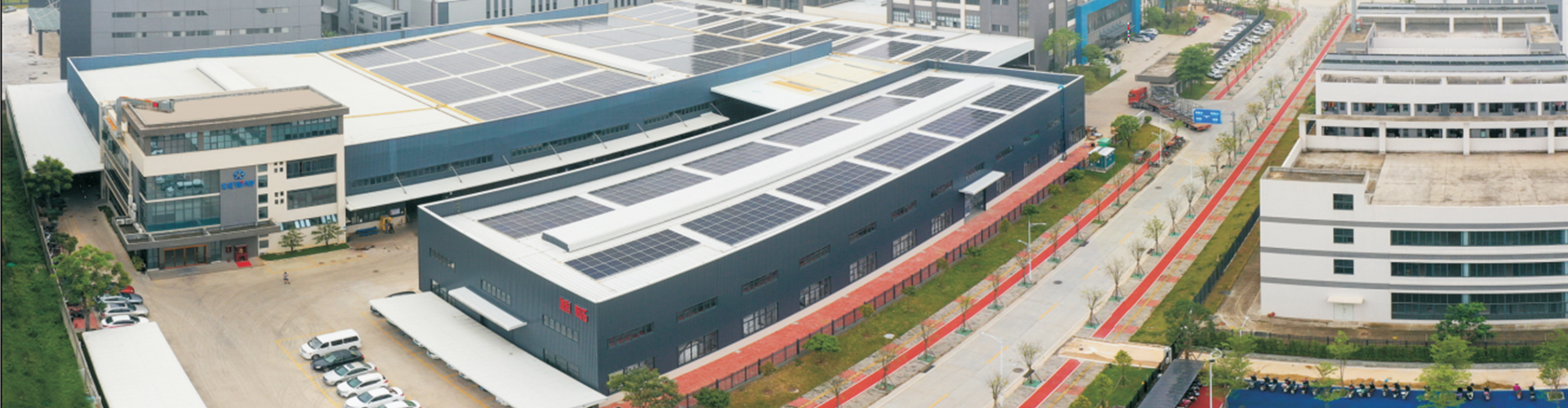
1. From Technology Imitation to Independent Manufacturing
Over the past four decades, China's glass machinery industry has evolved from relying heavily on imported technology and know-how to independently manufacturing conventional equipment that meets basic global standards. Today, the sector faces the persistent challenge of simultaneously boosting production efficiency and raising product quality to world-class levels.
The industry's modern history began in the early 1990s, when foreign-invested enterprises—primarily from Taiwan—relocated their production bases to mainland China. Early pioneers emerged in Shenzhen, and as the sector matured, these initial players spun off into multiple leading firms concentrated in Guangdong's Shunde district and Shenzhen. Over time, two major industrial clusters took shape: the Pearl River Delta and the Yangtze River Delta. By the turn of the 21st century, cities such as Foshan, Guangzhou, Shanghai, Hangzhou, Suzhou, and Zhangjiagang had become established production hubs, while the industry further expanded to the Shandong Peninsula, the Bohai Rim region, and various inland cities. Currently, China is home to more than 1,000 glass machinery manufacturers, with over 100 enterprises operating above designated scale, forming a complete and interconnected industrial ecosystem.
2. Pearl River Delta Dominates, with Shunde Commanding Half the Market
Within China's glass machinery landscape, the Pearl River Delta—and Shunde in particular—holds an undisputed leading position. Statistics indicate that more than 50% of the nation's cold-processing glass equipment is manufactured in Shunde, Guangdong. Benefiting from rising demand for photovoltaic glass and environmentally friendly building materials, the local glass machinery industry has experienced robust growth in recent years.
To sustain this momentum, the Shunde District Government has prioritized the development of five specialized machinery clusters, including zones for woodworking and glass machinery, pressure and ceramic machinery, plastic machinery, mold manufacturing, and transportation machinery. In early 2025, a major industry conference themed "Gathering Strength, Planning for Innovation, and Creating the Future Intellectually" brought together over 600 experts, scholars, and business leaders, providing a strong push for the sector's transition toward high-end, intelligent, and green manufacturing.
3. Export Surge and Rising Global Competitiveness
Chinese glass machinery exports have grown at an impressive annual rate of over 50% in recent years. In 2023, the industry's total market size reached RMB 32.82 billion, and for the first time, exports exceeded imports—with export value at RMB 3.24 billion against RMB 2.12 billion for imports. This milestone reflects a genuine upgrade in the industry's technological capabilities, with substantially reduced dependence on foreign high-end equipment.
Chinese manufacturers have become important global suppliers in photovoltaic glass production lines, ultra-thin glass processing, tempering and coating systems, insulating glass lines, and intelligent inspection equipment. Leveraging high cost-performance ratios and continuous innovation, Chinese machinery now serves more than 110 countries and regions. For example, exports of glass edging machines to Southeast Asia grew 15% year-on-year in 2025, successfully replacing some European brands in price-sensitive markets. Meanwhile, shipments to Italy reached US$3.6 million in the first quarter of 2025, demonstrating growing acceptance in established industrial nations.
4. Technological Upgrades: Intelligence, Precision, and Automation
The industry is accelerating its shift toward higher precision, greater efficiency, and deeper automation. Key development priorities include improving positioning accuracy and operational stability in pressing equipment, as well as advancing double-gob and even triple-gob presses to boost output. In press-blow forming—a critical technology for high-precision container production—breakthroughs are being pursued in seamless rotary machinery. Centrifugal forming, which reduces material consumption and lowers mold costs, is gaining traction, with multi-station fully automated machines becoming a market hotspot.
Individual section (IS) glass-forming machines are also evolving toward higher precision and productivity. Flame polishing technology, essential for improving surface quality, is being refined to meet mass-production requirements. Automated transfer systems between processes are increasingly adopted, offering faster speeds and flexibility across multiple product specifications. Furthermore, smart warehouses, robotic arms, and AI-powered inspection devices are being integrated into production lines. Under the national "dual carbon" goals, the industry is also stepping up development of energy-efficient equipment, such as vacuum-coated Low-E glass lines and glass recycling machinery.
5. Core Cold-Processing Equipment: A Complete Product Matrix
In the field of cold-processing, China has built a comprehensive portfolio of machines that cater to diverse glass applications.
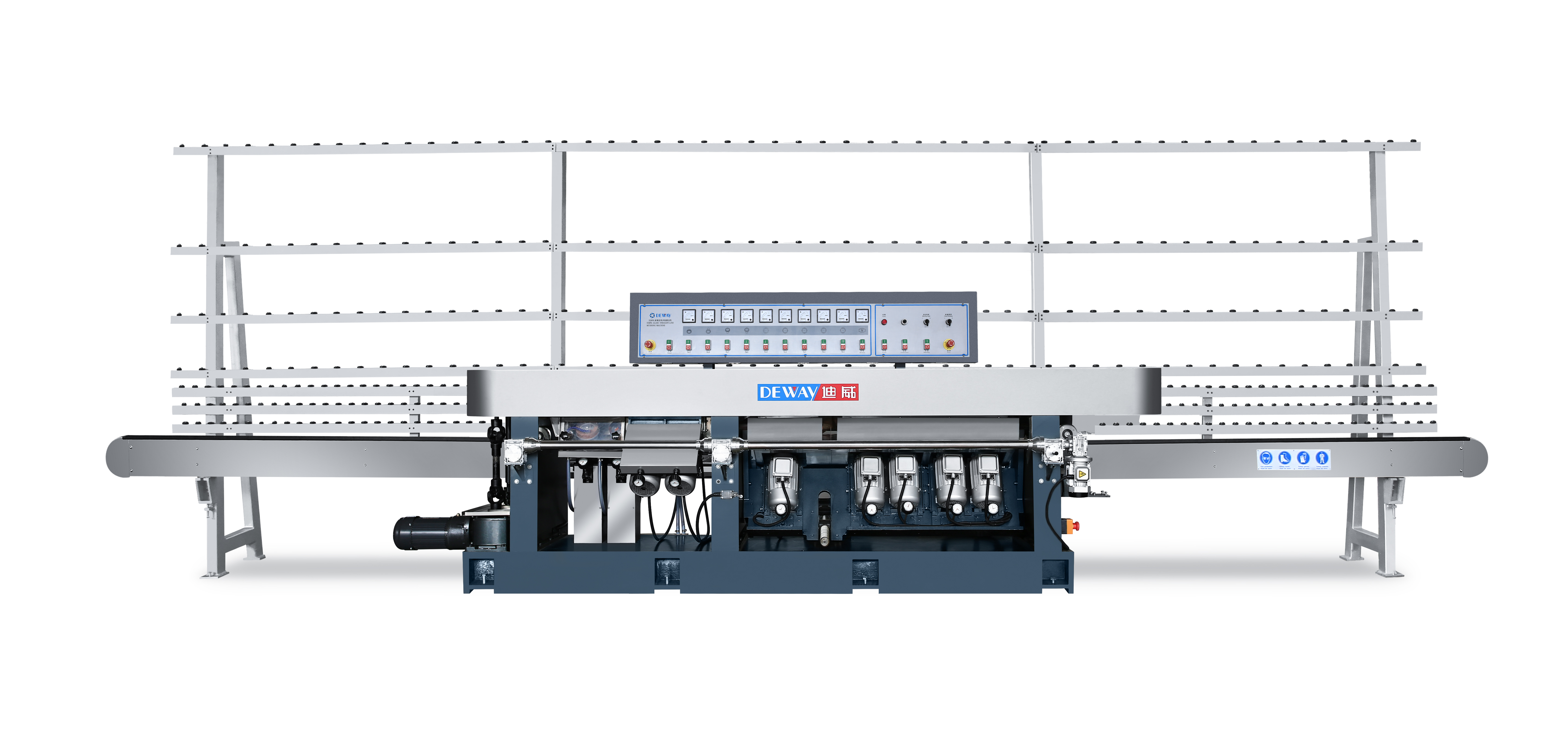
The Glass Single Edging Machine remains a foundational tool, widely used for grinding and polishing straight edges on furniture glass, architectural panels, and decorative pieces. Building on this, the Glass Double Sides Edging Processing Machine simultaneously processes two parallel edges in a single pass—combining rough grinding, fine grinding, and polishing—and is extensively applied in shower enclosures, home appliance panels, and engineering glass. The global market for double-edging lines reached US$286 million in 2025, with China accounting for more than 60% of total output, reflecting its strong manufacturing base.
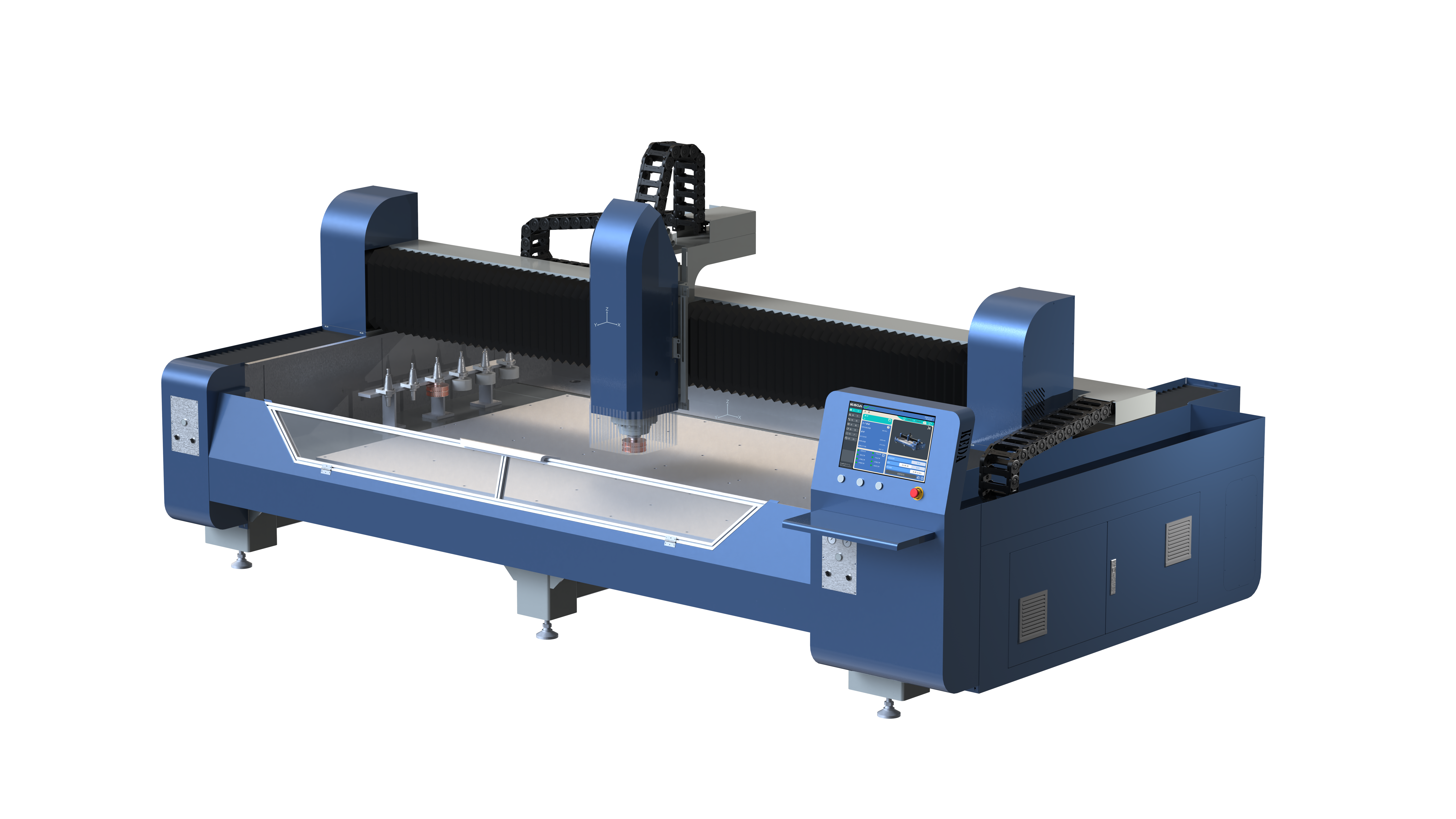
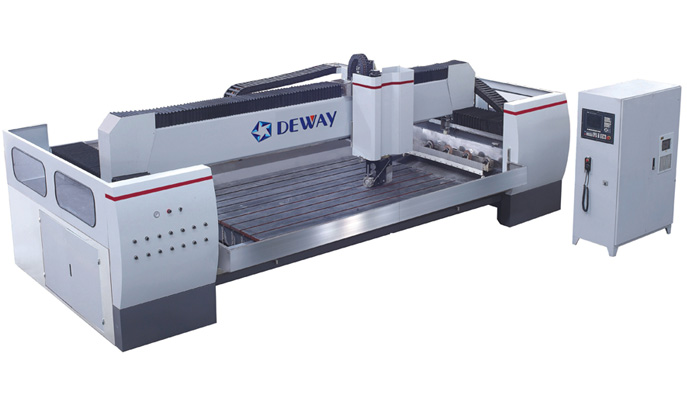
For applications requiring angled edges, the Glass Miter Machine with 45 degree offers adjustable grinding between 0° and 45°, enabling multi-level edge finishing for flat glass of varying thicknesses. In decorative and precision work, the CNC Glass Grooving Machine performs automatic engraving of lines, patterns, and text, serving the furniture, home appliance, and architectural decoration sectors. At the high end, the CNC Working Center integrates straight edging, beveling, and special-shaped machining into a single programmable setup—capable of cutting, carving, and grinding in one operation. This equipment represents the industry's strategic direction toward integrated, high-precision processing, and was prominently featured by domestic manufacturers at the 2025 Beijing International Glass Exhibition.
6. Outlook: Abundant Resources and Expanding Opportunities
China is endowed with rich glass-grade mineral resources and a highly skilled workforce, providing a solid foundation for both domestic supply and export competitiveness. As the national economy continues to grow and living standards rise, demand for industrial and civilian glass products—along with stricter quality requirements—is pushing the industry to align with advanced global standards. Rapidly growing end-use sectors, including photovoltaics, energy-efficient buildings, and consumer electronics, are directly fueling the need for more sophisticated glass processing machinery.
Driven by trends toward intelligence, low-carbon operations, and high efficiency, China's glass machinery sector is entering a new phase of opportunity. From its origins as a "world factory," the industry is steadily transforming into a hub of "smart manufacturing," offering cost-effective, technologically advanced solutions to customers worldwide. With continuous innovation and quality upgrades, Chinese manufacturers are well positioned to play an increasingly influential role in the global glass equipment market.